Our Shared Analysis
The status quo is broken and Minnesotans deserve better. This is how we got here — and how, together, we choose differently.
The two-minute version
For decades, the U.S. has invested a smaller share of its immense wealth into public goods than other developed nations. This disinvestment results in a lower quality of life for Americans, reflected in shorter life expectancy, higher child poverty rates, and other measures of well-being.
This is the inevitable result of prolonged attacks on public services from conservatives like Ronald Reagan. The strategy has been simple: cut taxes (mainly for corporations and the rich), defund public programs, amplify the resulting dysfunction to erode trust in government, then use that distrust to justify further cuts.
We can break this cycle, but it will require a movement of Minnesotans who reject this broken status quo. We know a better future is possible if we work together to create it.
The wealth is already here
Chapter in progress
The full chapter — how much wealth exists in Minnesota, and what that means for what we can afford — is being written by the We Make Minnesota team.
They say: “Americans are taxed to death.”
The United States is a low-tax country
Despite rhetoric about high taxes, the U.S. collects about a quarter less tax revenue than the average developed country. Imagine if we invested that much more in our collective needs.
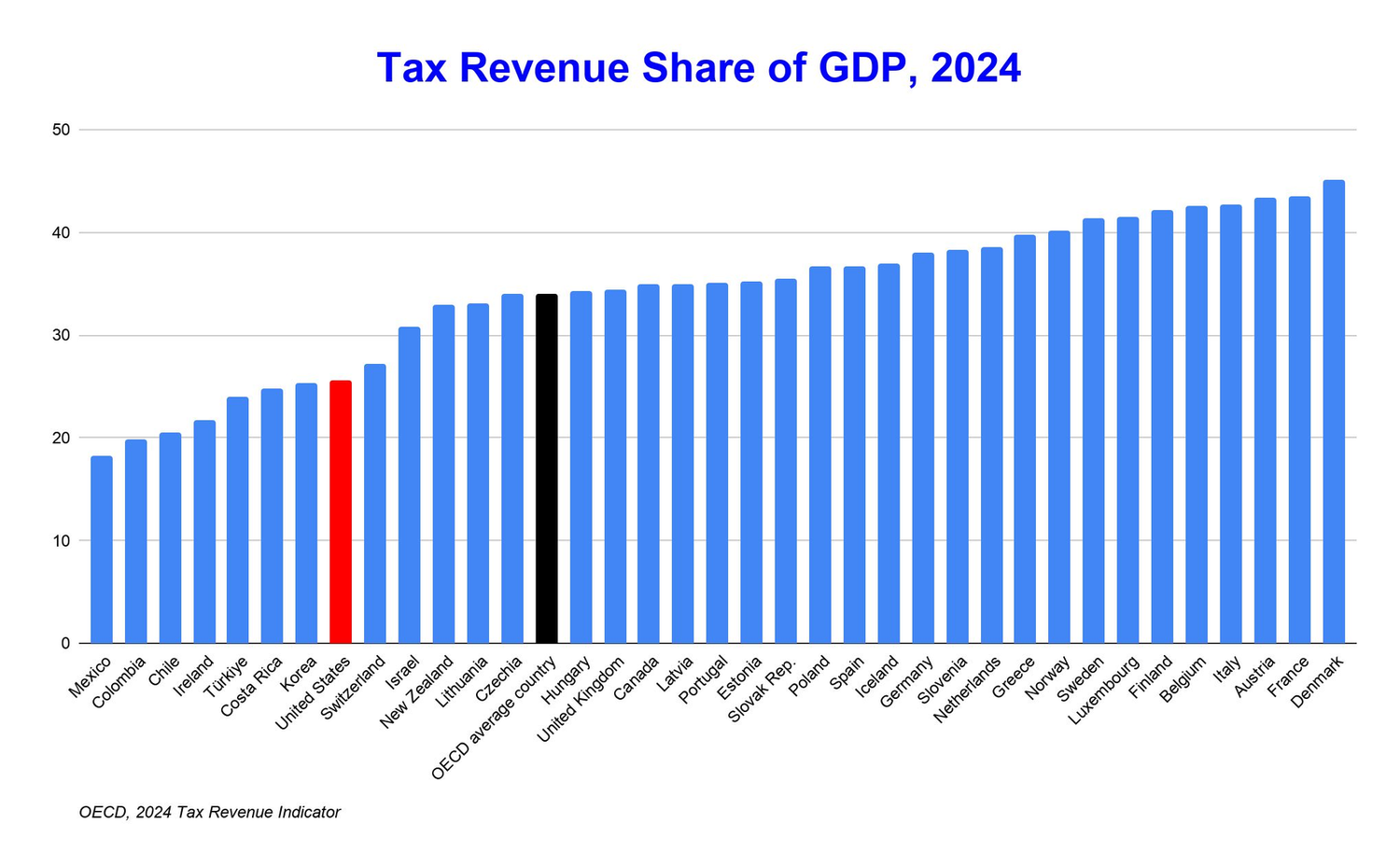
OECD · 2024 tax revenue indicator
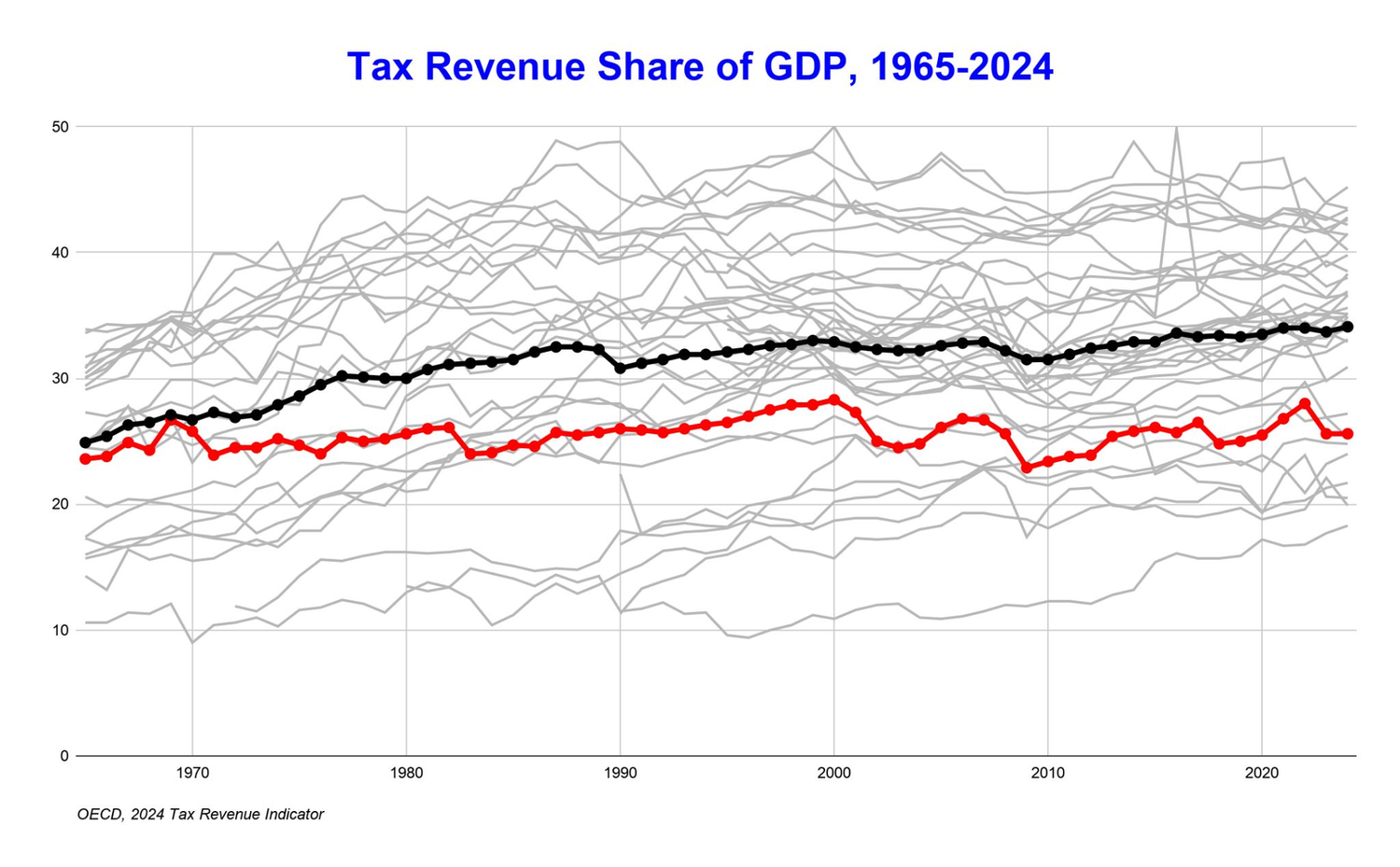
OECD · 1965–2024
The perception that Americans are overtaxed doesn't match the evidence. Among the world's developed countries, the United States sits near the bottom of the pack in terms of tax revenue collected as a share of GDP. Only a handful of these countries tax less.
This wasn't always the case. In the 1960s, the tax-to-GDP ratio in the U.S. roughly matched the average among developed nations. Starting in the 1970s, the U.S. began to fall behind and has stayed below the OECD average ever since.
That gap represents revenue that isn't being invested in schools, childcare, infrastructure, healthcare, and other public goods that provide the foundation of a thriving society.
They say: “Cuts don't hurt anyone.”
Choosing scarcity comes with a cost
Austerity carries measurable costs — in shorter lives, higher child poverty, and lower well-being than our peer nations.
shorter U.S. life expectancy than the OECD average — 78.4 vs 81.1 years (2023)
America's Health Rankings · 2025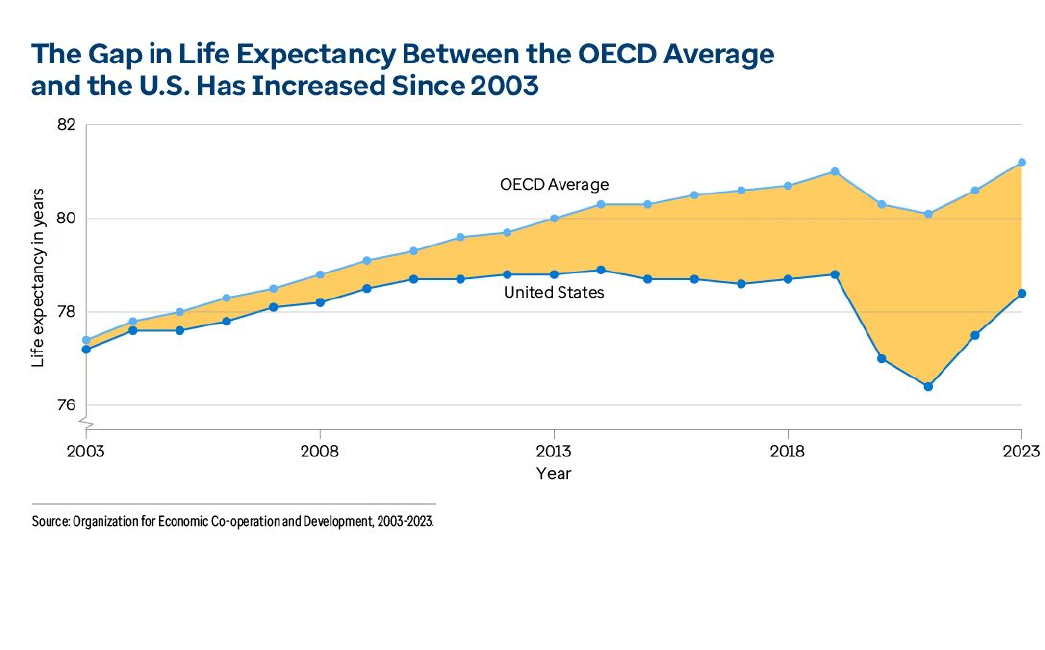
OECD · 2003–2023
OECD
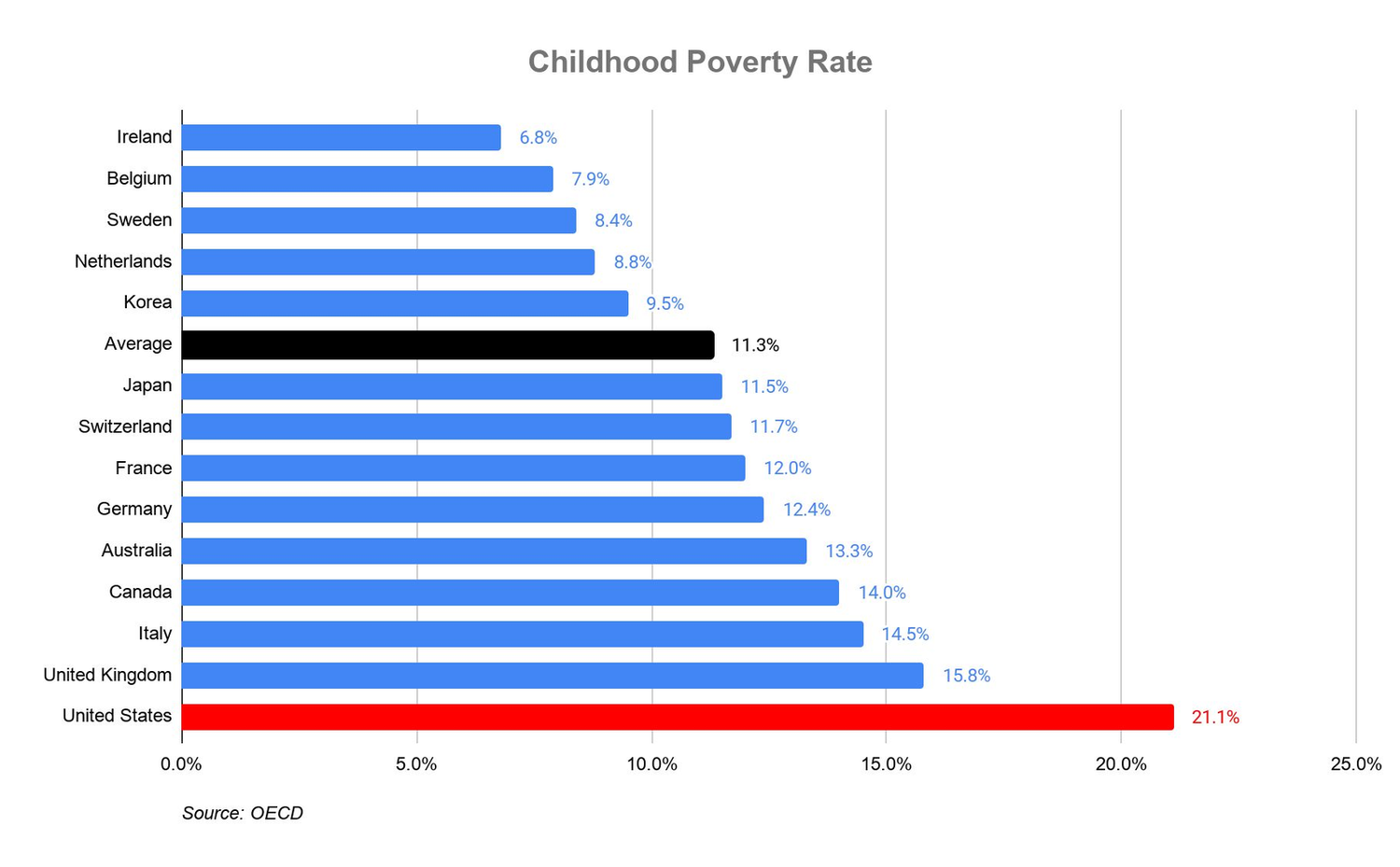
The U.S. pays a steep price for our failures to support public well-being. Here are just a few examples: Our rate of childhood poverty is double that in most developed countries, and our average life expectancy is roughly three years shorter.
We are taxed less and get less as a result. It's true that working and middle class families pay higher taxes in countries like France, Italy, and the Netherlands. But in return, they get much better access to public services like healthcare, higher education, and housing. These strong supports contribute to longer, healthier lives.
They say: “Government is the problem.”
“Starve the beast” is a deliberate cycle
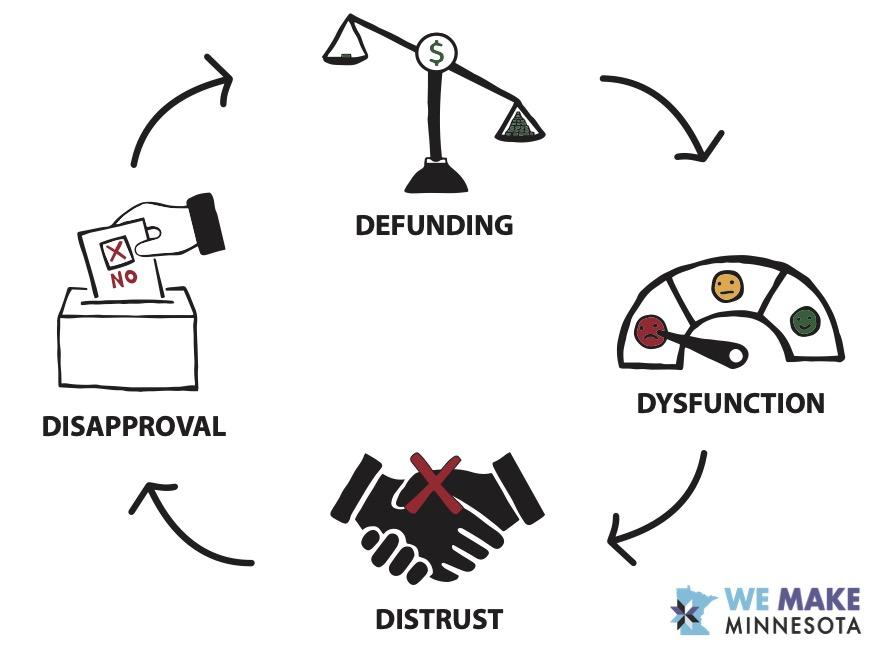
The conservative plan: cut taxes, create chaos. When underfunding leads to dysfunction, people lose trust in government — clearing the way for the next round of cuts.
We Make Minnesota
Piketty & Saez · 2007
BLS & Emmanuel Saez, UC Berkeley
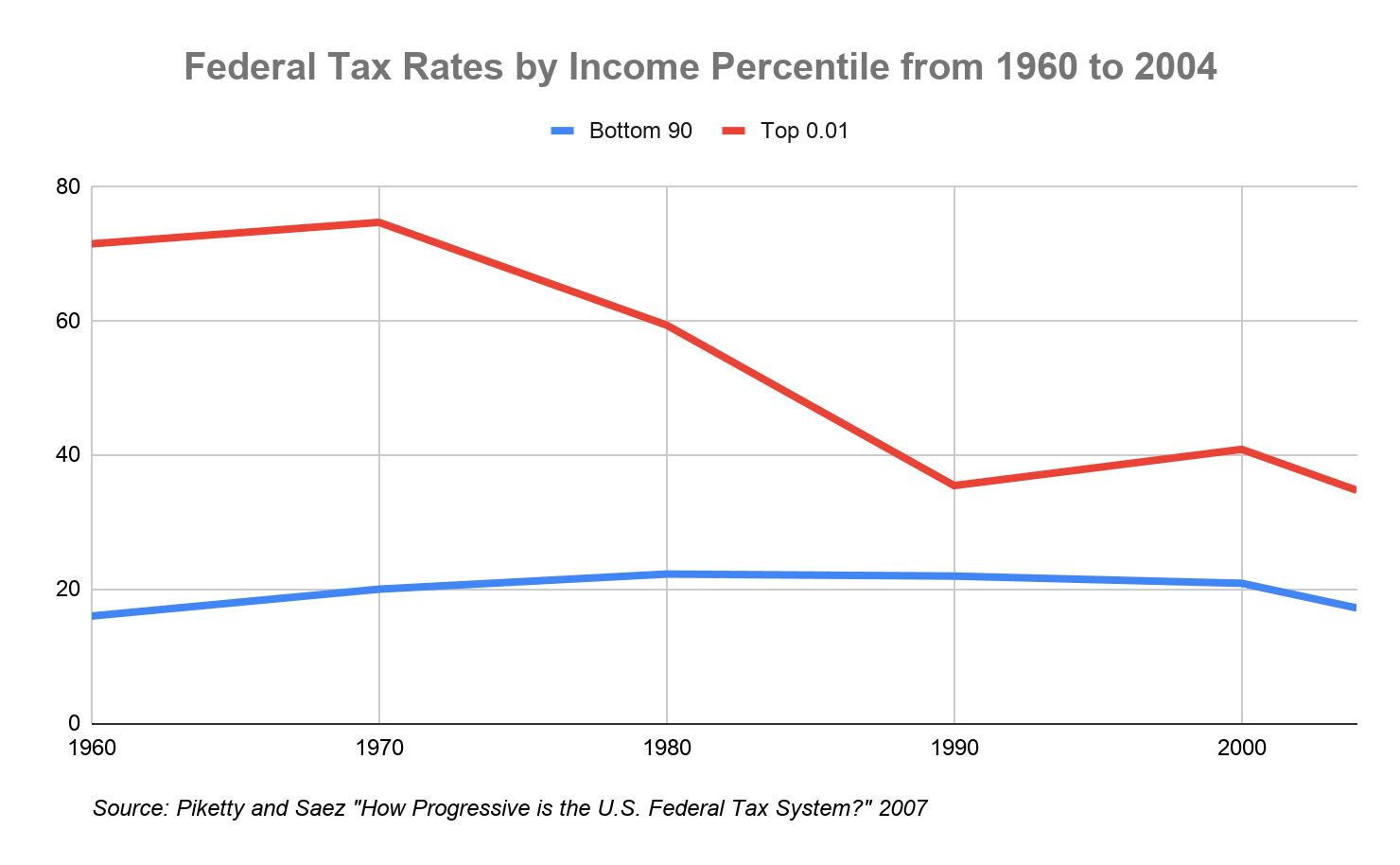
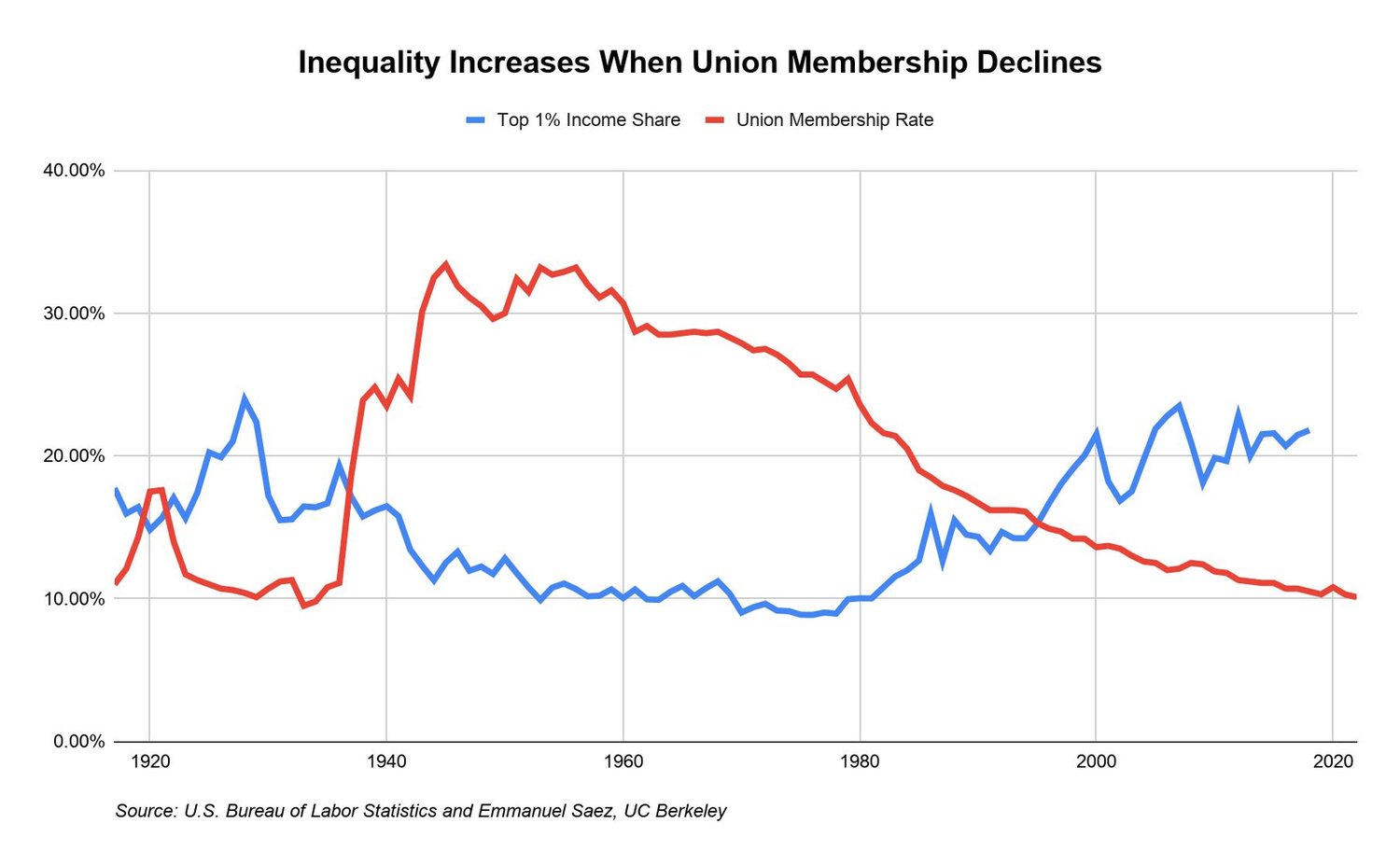
Conservatives like Ronald Reagan created a powerful narrative against taxes and public programs. Reaganomics argued that the only way to improve public welfare was to grow the economy, even if the rich capture most of the benefits. They pushed the idea of “trickle down” economics, where tax cuts for the wealthy would increase economic growth that would trickle down to working families. In reality, as we have seen, the rich got richer and everybody else was left to suffer from the deterioration of public goods and services.
Their strategy is simple: Start by cutting taxes and defunding public programs like schools, healthcare, and the social safety net. Without the resources they need, these programs struggle to function, which decreases the quality of services. Then, when the public interacts with these dysfunctional programs, they lose trust in government. Distrustful of the public institutions that disappointed them, people then lose interest in voting for politicians who support public programs, which results in even more defunding, and the cycle continues.
“I don't want to abolish government. I simply want to reduce it to the size where I can drag it into the bathroom and drown it in the bathtub.”
Grover NorquistThey say: “Tax cuts are how we win.”
Anti-tax politics crossed party lines — Minnesota isn't immune
What began as a conservative strategy is now bipartisan. Since the 1990s, many Democrats have joined Republicans in the push toward tax cuts and the privatization of public services.
Unfortunately, decades of trickle down economics and anti-government rhetoric have now impacted both sides of the aisle. In 1996, Bill Clinton said “the era of big government is over,” and led the Democratic party in the direction of cutting taxes, weakening corporate regulation, shrinking the social safety net, and privatizing public services. Rather than speak to people's foundational insecurities — our lack of healthcare, quality education, or a clean environment — both parties now champion a corporate vision of society, in which personal well-being stems from individual economic attainment rather than holistic collective well-being.
Although tax cuts might sound good, they rarely amount to much money back in our pockets, and the result is far less for our schools, parks, healthcare, and other collective needs. No tax cut will make up for a hospital that closes, an understaffed school, or a broken water main. These are the essential building blocks of strong communities and broad social prosperity, which no individual can purchase for themselves. As public sector workers, grassroots advocates, and caring Minnesotans, it is our job to fight for investments in a state that works for everyone.
“The era of big government is over.”
Bill Clinton · 1996 State of the UnionThey say: “It's impossible.”
Minnesota has chosen differently before
From the original Minnesota Miracle in 1971 to the transformative legislation passed during the 2023–24 DFL trifecta, Minnesota has proven that bold public investment is possible.
Although there is a lot of work ahead, Minnesota has a proud history of leading progress on social and economic issues. We pioneered fair funding for school districts in the 1970s and recently passed a wave of pro-worker, pro-family legislation, including free school meals for all school-aged children and a new Paid Family Medical Leave program so that all Minnesotans can take time off to care for their loved ones. We can do that again.
That progress was made possible by decades of organizing from unions, faith communities, and grassroots advocates. These efforts need to continue if we want fully funded communities with access to public goods like childcare, housing, and healthcare.
The Farmer-Labor income tax
Governor Floyd B. Olson's administration established Minnesota's first progressive income tax — the foundation the rest of this list is built on.
The Minnesota Miracle
The state took on the bulk of school funding so a child's education no longer depended on the wealth of their district.
Free school meals. Paid family and medical leave.
A single-seat majority passed the largest wave of pro-worker, pro-family legislation in a generation.
“We all do better when we all do better.”
Paul WellstoneHow we choose differently again
estimated revenue from a new fifth-tier income tax bracket, FY 28–29
MN Senate Taxes · SF2290 revenue estimateestimated revenue from increasing the corporate tax rate, FY 28–29
MN Senate Taxes · SF2290 revenue estimateChapter in progress
The closing chapter — the path forward, and how Minnesotans make it happen — is being written by the We Make Minnesota team.