The Record
A Summer Update from We Make Minnesota
Dear Friends:
It’s been a while since our last update, but there’s lots going on and we are excited to catch you up. For us, summer has been a busy but meaningful time. In July, we welcomed Andrew Ulasich as our Organizing Director and we have been on the road ever since, talking to Minnesotans about the challenges and needs in their workplaces and communities.
So far, we are hearing one resounding message: The status quo is not working. From inaccessible healthcare to underfunded classrooms and scarce resources in social services, we are failing to provide the foundations of strong communities and a high quality of life.
Of course, you will not be surprised to hear that we here at We Make Minnesota believe many of these problem areas require additional funding. But there is a deeper problem as well: We have ceased to envision our shared needs — from education to healthcare to environmental stewardship — as our top priority and the true generator of shared prosperity. What is our answer to the horrors of the opioid epidemic, the climate crisis, or the loss of arts and extracurriculars in our schools?
Our collective challenges require collective solutions, and our failure to provide them is the real reason for the distrust surrounding politics and governance today. There is more to say about the message and the policies we need to meet this moment, but it’s much more impactful coming from the folks living it, and that’s our plan for this summer.
Here is a list of events we have coming up, followed by summaries of where we’ve been so far:
Upcoming Events
We have just started our visits around the state and would love to have you join us at one or more of these events. If you are interested in having us come to your district, community, or workplace for a town hall or round table conversation, let us know! Here are the events currently on the calendar, but more will be added soon.
8/3 St. Paul Town Hall RSVP Here
8/5 Minneapolis Town Hall on childcare RSVP Here
8/12 Coon Rapids Town Hall RSVP Here
8/22 Bemidji Town Hall RSVP Here
9/3 Duluth Town Hall RSVP Here
Recap: July 10 — Mankato Round Table + Bus Tour
On July 10th, we kicked off our summer event series with a round table and rally in Mankato. The table included Rachel, a home-care worker and SEIU member, Chandra, a vocational counselor and president of MAPE Local 1902, Cindy, an academic affairs administrative assistant and president of AFSCME Local 638. We were also joined by Kristen Crowell, from Families over Billionaires, and State Representative Luke Frederick.
Hearing their incredibly heartfelt stories about what underfunding and budget cuts have done to their workplaces and daily lives was very powerful, and I know we will remember that conversation for a long time to come.
In particular, we were struck by the moment when Chandra connected staffing challenges in the state’s Vocational Rehabilitation Services to program cuts at Mankato State, where Cindy works. MAPE workers like Chandra work with the deaf and hard of hearing to build skills and find gainful employment. But that job requires specialization in occupational therapy techniques, American Sign Language, and more. When Mankato State cut related programs due to insufficient funding, it meant fewer qualified candidates for open positions in vocational rehab, which means more deaf Minnesotans going without the assistance they need to join the workforce. When Minnesotans are unable to reach their full potential, we lose out on their valuable contributions and we pay more in social support.
Chandra also shared with us the story of a client she worked with for 10 years who recently started practicing as a dentist. The community gains a much-needed medical professional and the state gains the economic benefits of another wage earner and small business. This is, “we all do better when we all do better” in a nutshell. Unfortunately, the opposite is also true.
You can listen to the full conversation, 3 minute recap, and the story of Rachel, a home care worker and member of SEIU. We will have a lot more clips and videos to share from other parts of the state in the weeks to come!
Immediately following the conversation, we were joined by Families Over Billionaires, as they stopped on their nationwide bus tour. Families Over Billionaires is one of our nationwide partners and advocates for a tax code that makes wealthy individuals and the most profitable corporations pay what they owe so that all of us can thrive.
The Mankato Free Press wrote about the Families Over Billionaires bus tour here.
Recap: July 20 — Rochester Round Table
On July 20th, we hosted a round table in Rochester. In this conversation, we had multiple workers from Rochester public schools, community advocates and faith leaders with ISAIAH, a home care client from SEIU Healthcare, and higher ed staff from both AFSCME and MAPE. State Representatives Tina Liebling and Andy Smith also attended, as well as Simon Glaser (candidate for SD24), Jason Lohmann (candidate for SD20), Heather Holmes (candidate for HD24A), and Steven Holm (candidate for HD20B).
We will have clips and interviews to share soon You can also read the write-up in the Rochester Post Bulletin.
Recap: State Budget Briefing with Ahna Minge
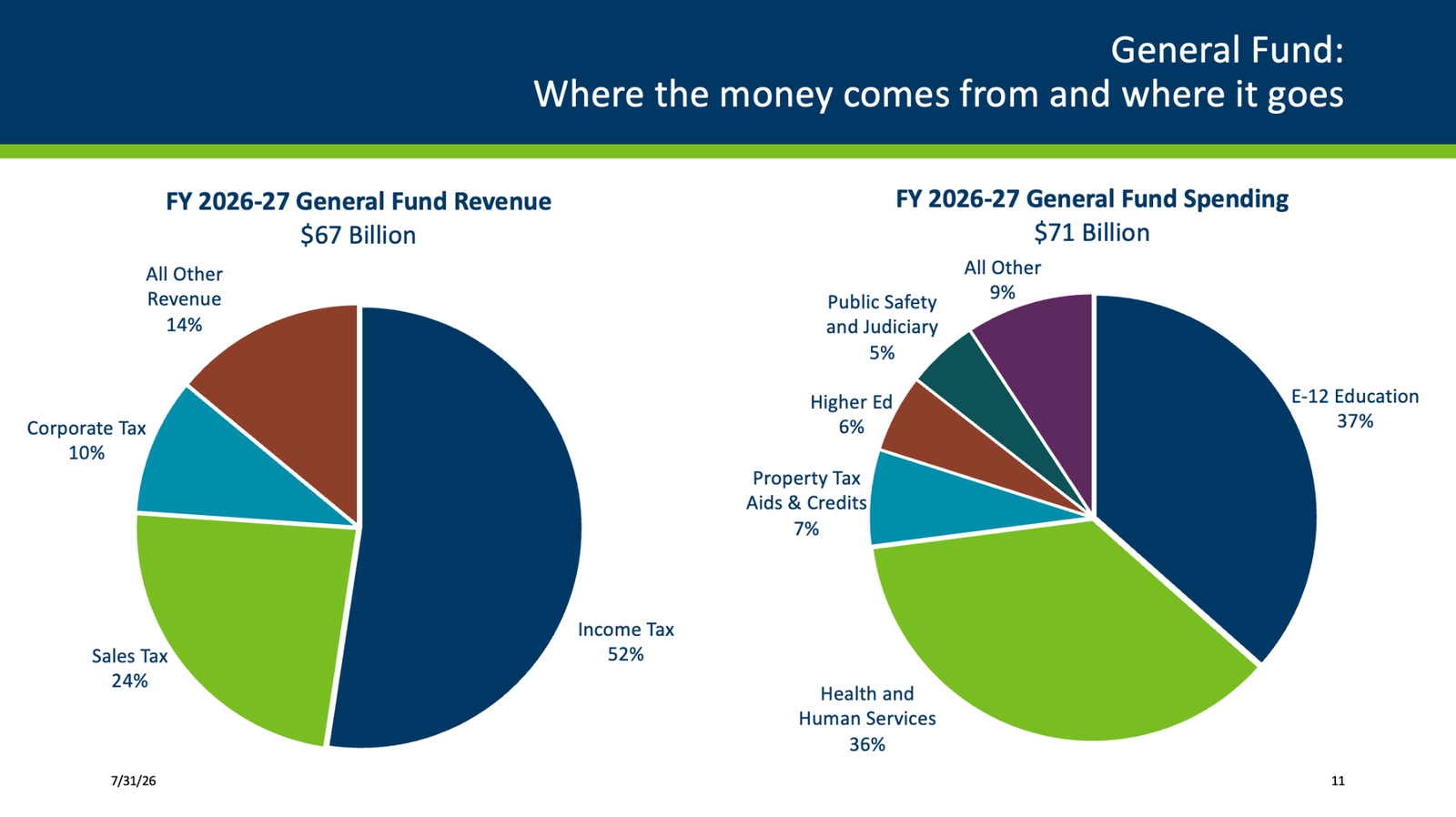
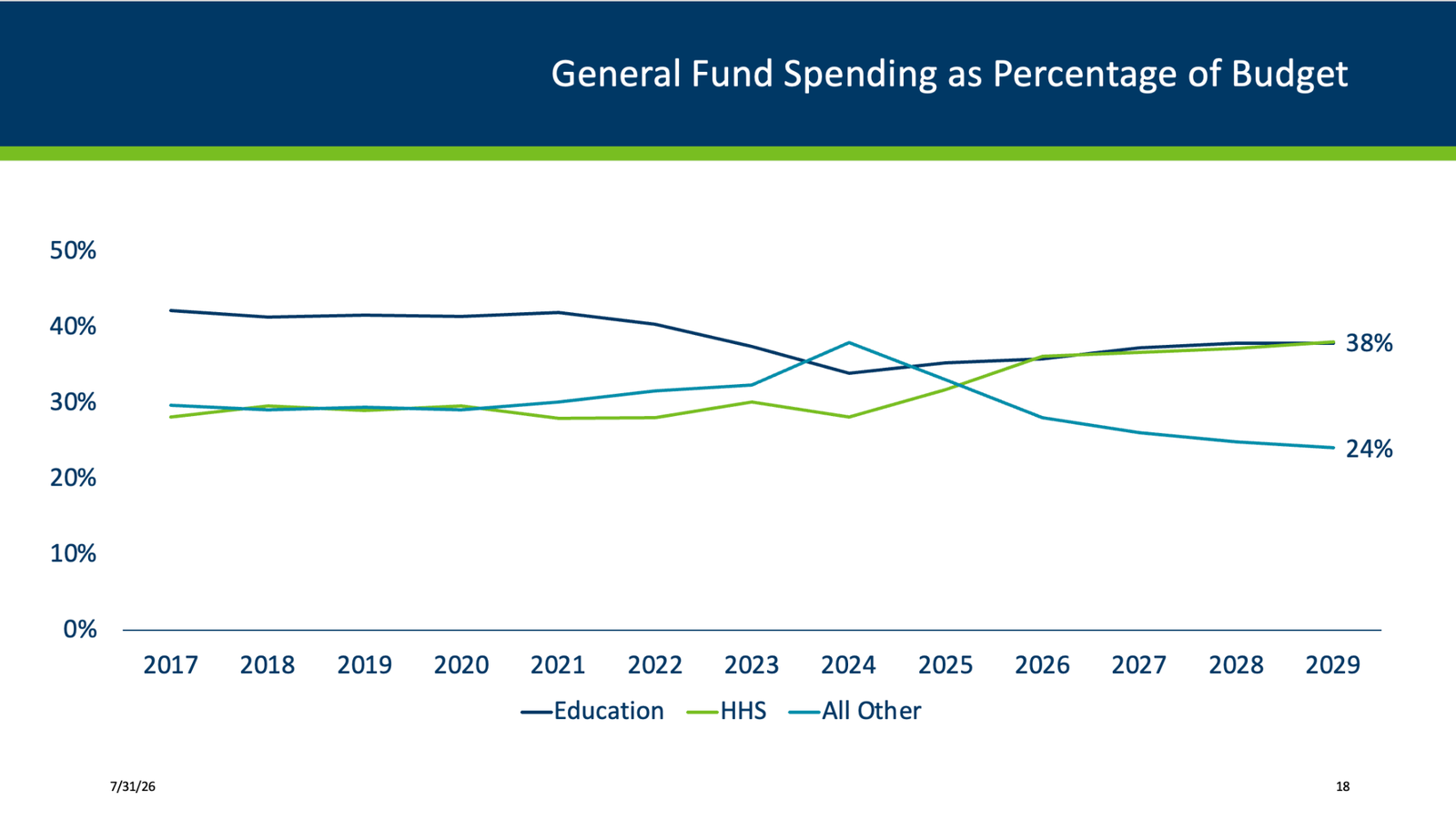
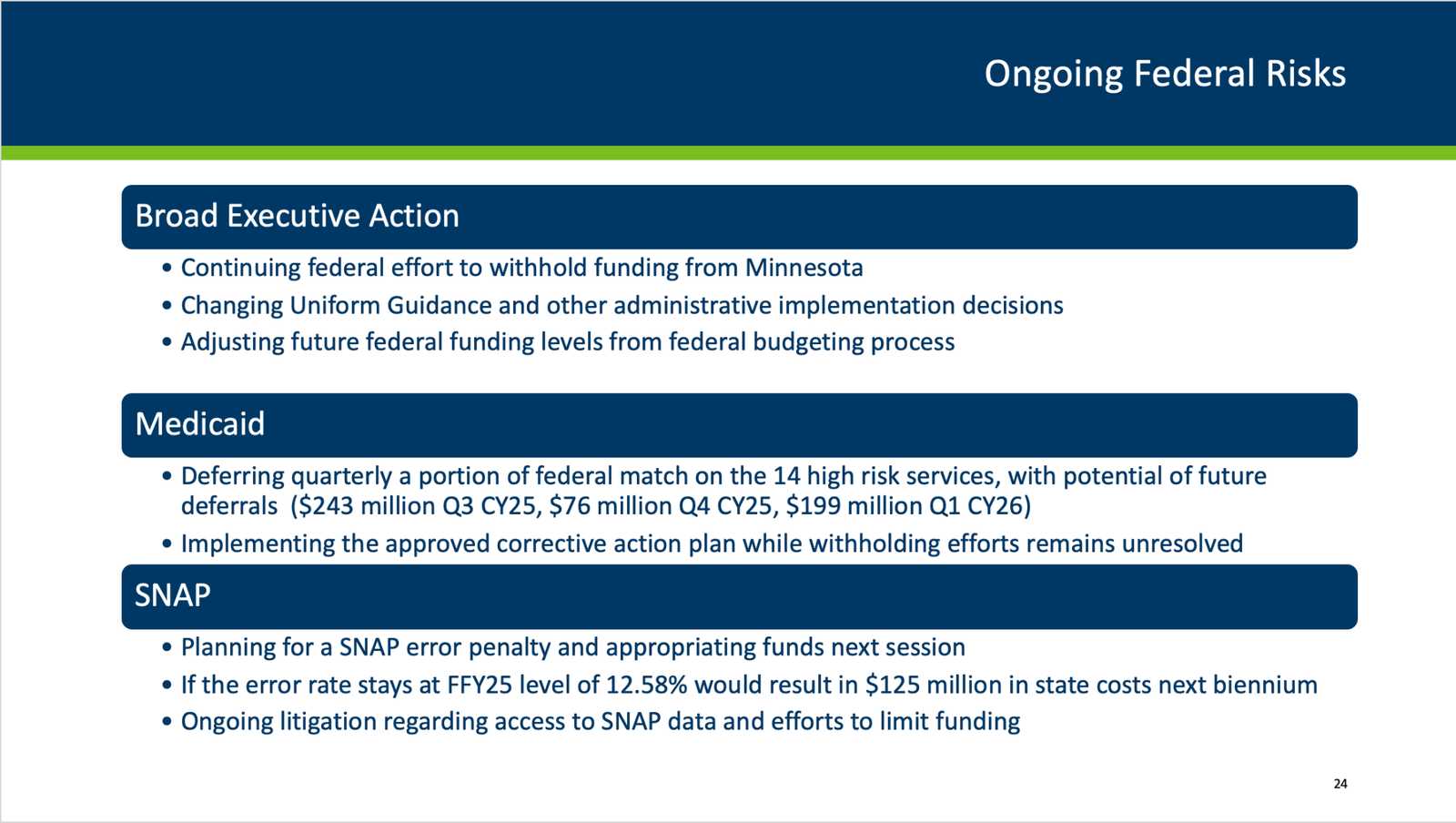
On the policy front we were also excited to convene some coalition partners and legislators for a budget briefing with MMB budget authorities Ahna Minge and Travis Bunch. They provided some very interesting and helpful reminders or where our state budget comes from and where it goes. They also detailed some key challenges facing the state, including a persistent structural imbalance, as well as looming cuts from federal legislation.
While we cannot share their full slide deck due to size limitations on attachments, we are including a few key images below and would be happy to circulate the full presentation via regular email by request.
What the presentation made clear is that, as Minnesota and the United States grows older, we will need to continue to work hard to find ways to fund the care our communities need while note squeezing out other priorities. This is embodied by the increasing combined share of education and HHS spending. It should be obvious to anyone who wants to live in a functional state, that we can neither neglect the elderly and disabled, nor the education needs of our youth.
Nationwide Tax Updates
Of course, it wouldn’t be a We Make Minnesota newsletter without a little tax news from around the country. In particular, we are tracking developments in a wide range of tax policies seeking to raise more money from the tech industry, which is growing rapidly and generating enormous wealth in the hands of the few, but widely shielded from taxation.
Illinois
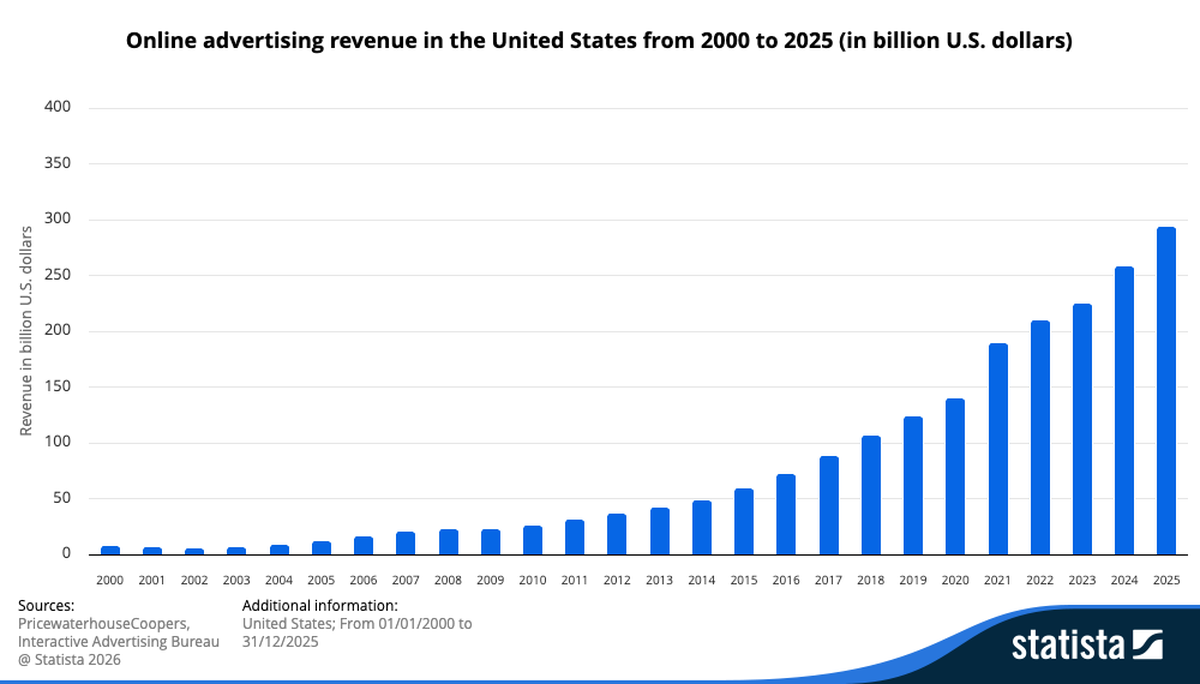
In June, Illinois passed a series of new taxes on the digital economy, including taxes on social media, cryptocurrency, prediction markets, and digital advertising. Illinois joins the growing number of states taxing digital advertising, including Utah, Maryland, Washington, Hawaii, and New Mexico. Nationwide online advertising revenue totaled nearly $300 billion in 2025 and is largely untaxed at the state level here in Minnesota.
We Make Minnesota supported taxes on advertising services and social media platforms proposed in the legislature last year and will work to pass those into law next session. Both pieces of legislation would be important steps in modernizing our sales tax base to reflect the modern service-based economy and ensure budget stability going forward.
Virginia
The state with the largest number of data centers just passed a tax on the electricity they use. Data centers in Virginia will now be charged 1.1 cents for every kilowatt-hour consumed. To give a sense of scale, a site with a capacity of 100 megawatts would owe approximately $9.6 million each year, and a gigawatt campus would owe $96 million each year. The Virginia law institutes a $600 million cap on collections from this tax. Refunds will be issued to data centers if total collections exceed that amount.
A similar tax passed in Minnesota would not raise as much revenue due to the size difference in the tax base: Virginia has 665 data centers, using 24 terawatt-hours per year, while Minnesota has 75 centers using 1.5 terawatt-hours per year.
As more data centers are being proposed across the state (including in the Star Tribune building), Minnesota should closely examine ways to raise revenue from this growing sector of the economy.
Thanks for reading and have a great weekend!
Eric, Alec, and Andrew
All Things Public, 5/22: What’s next?
[We Make Minnesota] All Things Public, 5/22: What’s next?
Legislators, Partners, Allies, and Staff:
Wishing you all a happy Memorial Day with the requisite session retrospective and a few thoughts on the challenges and opportunities ahead. We’ll start with the forward-looking piece, for those of you who have had your fill of rehashing the past.
Looking Ahead to 2027
The 2025 and 2026 budget deals substantially reduced the state’s structural deficit. Unfortunately, they did so largely at the expense of local governments and programs that Minnesotans depend on. Expanded property tax refunds will be celebrated by DFL and GOP alike, but they are a band-aid on the growing gap between our needs and our means. Much of that is due to federal policy changes, but the responsibility falls nonetheless on state and local actors to figure out a way forward.
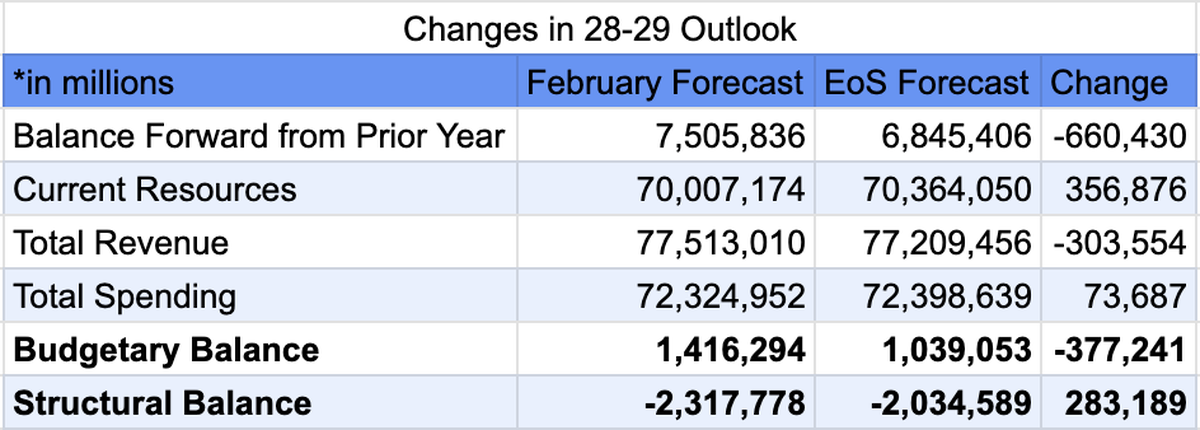
After changes passed in 2026, the 2027 legislature will take up its business with an ending balance of $1 billion projected for the 28-29 biennium, which is less than the $1.4 billion surplus forecasted in February. However, much of that is due to one-time spending. By increasing tax revenue through federal tax conformity, legislators reduced the structural imbalance from $2.3 billion to $2.03 billion. What will that mean for 2027?
In 2023, DFLers in the House and Senate inherited a $17 billion surplus. They used this substantial sum to cut taxes for lower-income Minnesotans and make important investments in schools, healthcare workers, infrastructure, and more. But in the years since, some of the glow of these budget victories has faded — historic school funding was consumed by rising healthcare costs; funding intended for new housing programs sits unused; and fraud resulting from outsourcing has overshadowed important investments in state Medicaid programs.
2027 will have to be different. To regain public trust and truly deliver for Minnesotans, we will have to focus more on the how — not coincidentally this is the mantra of Ted Kolderie, a prominent architect of the original Minnesota Miracle. The ‘how’ will include more revenue and a fairer tax code. But it will also necessitate an honest assessment of the ways in which our governing mechanisms have weakened over time or failed to keep pace with a modern society.
The battle to save HCMC portends the sort of structural challenges that will only become more common in the years ahead. How many other hospitals will begin to buckle under the pressure of increasing uncompensated care and inflationary pressures? How will families respond to the astronomical cost of childcare? How will we maintain adequate infrastructure as gas tax revenues continue to decline? We need bold, holistic responses to these struggling systems.
As a coalition dedicated to the importance of collective action through democratic institutions, We Make Minnesota hopes to be an enthusiastic participant in those conversations.
As for Session…
For We Make Minnesota, the major revenue and spending pieces were top of mind. Although the final tax deal gave more away than good budgeting would recommend, it was better than what we might have expected given split control and the GOP’s thirst for tax cuts. The $400+ million price tag of the major tax cuts (offset by new revenue) included in the omnibus tax bill will reduce funds rolled over into the next biennium, but this impact pales in comparison to cuts passed during some other split-control sessions.
I’m thinking back to 2021, when the state gave businesses a $700 million double-dip tax break on PPP loans, which did not save jobs and specifically benefited the people who needed it least. Or, in 2022, when the state used $2.7 billion (!) of general fund dollars to refill our unemployment insurance trust fund rather than letting rates adjust per statute.
By those standards, DFLers in the House and Senate did a good job of protecting our state budget’s integrity. The upside of a tighter budget window is that it minimizes wasteful cuts.
Here are some notes on the major tax and budget items, which include:
Funding for HCMC
$1.2 billion in bonding
A $254 million 1-year reduction in tab fees
$90 million for updating IT systems
Increased homestead property tax refunds
Tax deal with a net general fund loss of $24.1 million in 2026-27 but a gain of $342.2 million in 2028-29
Other wins sustained investment in free filing programs and homeless prevention aid
HCMC Funding:
The Health bill includes $205 million for HCMC and a $500M reserve account that can be accessed with legislative approval if the hospital certifies that it is nearing insolvency. $120 million currently slated to be used for a new rail line from the Twin Cities to Duluth could be used to fill this fund if the project does not receive federal grant funding by 2028.
The legislation did not make any modifications to the 0.15% Hennepin County sales tax, which will remain in effect until the construction bonds for Target Field are paid off. Until then, it will also continue funding extended library hours in Hennepin County, youth sports initiatives, and the operations of the ballpark authority.
We Make Minnesota and several of our partners celebrated HCMC funding as much-needed reassurance for hospital staff and an important step towards stability for Minnesota’s most important hospital. It is not a permanent fix, but it gives the legislature time to return next year to construct a more durable solution. We were honored to be present at a press conference celebrating the victory yesterday and hope that state leaders will continue to center the importance of public institutions in their message and platform going forward.
Bonding Bill:
The legislature passed a $1.24 billion capital investment bill, including $420 million for water infrastructure, $177 million for transportation, and $75 million for the University of Minnesota. It also includes funding for asset preservation at Minnesota State, local road improvement fund grants, improvements to the Roy Wilkins Auditorium in St. Paul, and many other local projects.
The $420 million for water infrastructure was a bipartisan priority and is crucial to help local governments build facilities to manage wastewater and drinking water. These facilities are a great example of the most basic needs that can be met only with collective funding.
Vehicle Tab Fees:
Minnesota has the 4th largest road system in the country, and our weather makes the maintenance of those roads more expensive than in most states. This maintenance is funded through mechanisms like the per-gallon gas tax, sales tax on the purchase of vehicles, and annual vehicle registration fees, aka “tab fees”.
As vehicles become more fuel efficient and the share of electric cars increases, the revenue from the gas tax will decrease. These electric vehicles are also heavier than gas vehicles, resulting in more wear and tear for our roads and bridges. The rising costs and decreasing revenues spurred legislators to increase tab fees to make sure we can afford to maintain our transportation infrastructure.
Lowering these tab fees had been a sticking point for GOP legislators this session, which explains why this agreement includes a 1-year reduction in those fees, starting on Jan. 1, 2027. The reduction will be paid for using General Fund dollars and won’t take money away from roads and bridges. This tax reduction will put some money back in the pockets of Minnesotans, but most of the benefits will go to those with more expensive cars, and the cuts will hurt our ability to meet our basic infrastructure funding needs.
IT Funding:
Workers from counties and state agencies came to the Capitol multiple times this session to demonstrate the outdated technology that they have been using to administer public programs like MinnesotaCare. Much of this software is from the 1980s and has been chided for resembling the old “Oregon Trail” video game.
It can take up to two years for a new employee to become proficient in its use, and counties claimed that roughly half of those employees get frustrated trying to learn the antiquated software and quit before their training is complete. Earlier in the session, it was estimated that a complete overhaul of the state and county IT systems could cost roughly $500 million. This bipartisan deal is not that expansive, but it will provide $90 million over the next three years to modernize IT systems across the state.
Property Tax Refunds:
The budget deal included $125 million in one-time property tax refunds for roughly 600,000 homeowners with a household income under $143,000. The average household will get $171 from this deal.
Similar to the tab fee reduction, this temporary benefit does not address the structural problems that create higher property taxes. Local government aid has been steadily decreasing as a share of the state’s general fund and federal cuts have increased costs for local governments. Using statewide revenue to alleviate the burden and inequity of local taxes was a cornerstone of the original Minnesota Miracle, but this strategy is not sustainable without policies to strengthen revenue collections at the state level.
In Other News…
Taxes have become a more prominent topic as we approach the 2026 election season and candidates jockey for position on widespread cost-of-living concerns. We are seeing some good ideas, like how to tax the rich, but also a good amount of bad ones.
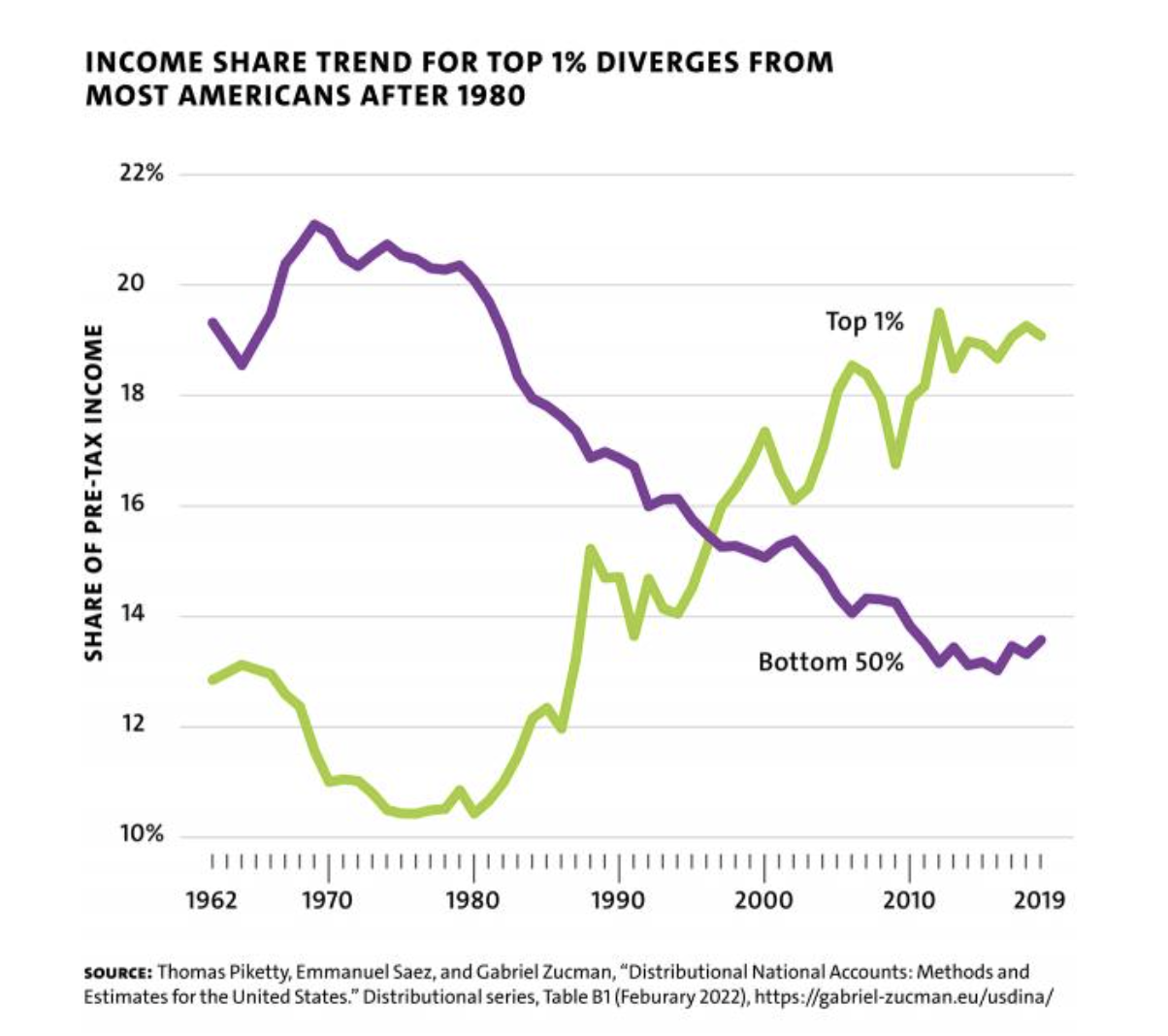
We enjoyed this piece in The Guardian by Eduardo Porter discussing the dangers of the latest proposals from Democrats like Sen. Cory Booker and Sen. Chris Van Hollen to drastically cut taxes for low- and middle-income families and pay for them through increased taxes on the wealthy. Porter argues that “The strategy endangers the prospect that the United States might ever build a social contract based on a promise of shared prosperity.”
Perhaps this “slopulist” trend will finally subside now that Jeff Bezos is getting in the game. On that front, we also liked a couple of articles on the subject over at The Atlantic, which are unfortunately paywalled. Rep. Feist recommended the aptly named “So nobody is going to pay taxes now?” by Annie Lowrey and we also appreciated this piece by moderate budget analyst Ben Ritz. Perhaps the silver lining behind these bad ideas is that they can solidify a more constructive consensus for how government can more effectively deliver.
More on that to come.
Thanks for reading and have a great long weekend!
Eric & Alec
All Things Public, 5/8: All About HCMC
Legislators, Partners, Allies, and Staff:
As session comes down to the wire, it seems the consensus most urgent priority is Hennepin County Medical Center. The critical safety net hospital is at risk of closure due to large amounts of uncompensated care and impending Medicaid cuts.
There is broad consensus that emergency funds are needed, but the sticky question is how? In this HCMC edition of All Things Public, we share our perspective on the major questions at hand, namely:
What is the need?
What are the options
One-time v. ongoing revenue
Tension between perfect and good
Understanding the causes
Let’s dive in.
What happened?
HCMC has operated with budgetary challenges for several years, with the county taxpayer’s subsidy increasing from $40 million in 2023 to over $100 million in 2025. Now, several factors have created a gap too large to close with the county property tax levy. These factors include:
One-time losses: $115 million in UCare collapse and spend-down of COVID relief money.
Rising Prices: Prices typically increase at roughly double the rate of reimbursements.
Uncompensated Care: $40 million in 2020, growing to $104 million in 2025.
Future Federal Cuts: Cuts in HR-1 are estimated to cost $1.7 billion over the next decade.
Capital Needs: Delayed equipment and facility maintenance can no longer be ignored.
How much funding do they need?
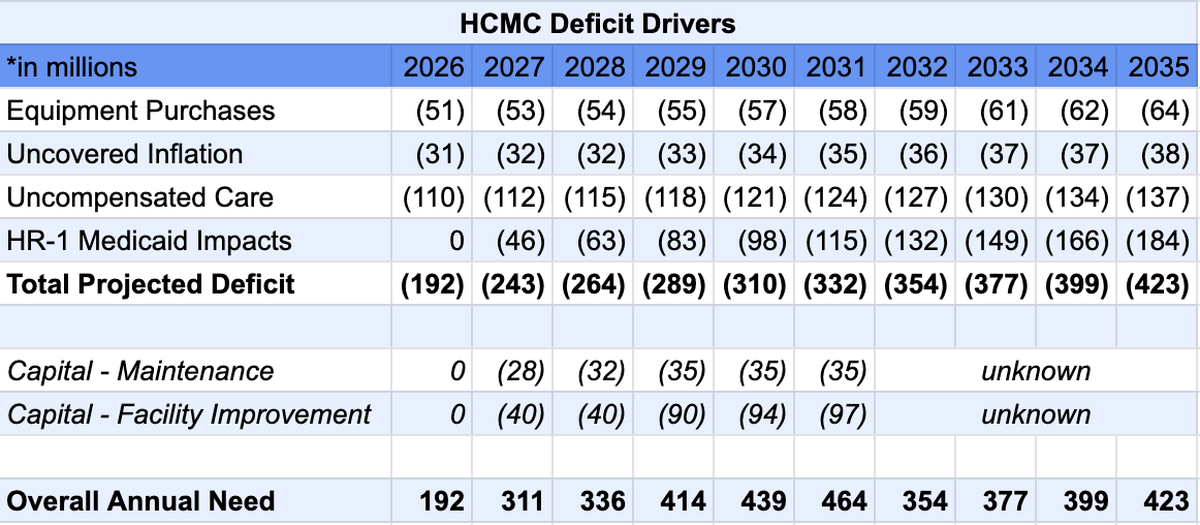
Much of HCMC’s financial instability has been driven by rising uncompensated care costs (charity care and bad debt). The chart below shows that when accounting for equipment purchases, uncovered inflation, and uncompensated care, HCMC’s projected operating shortfall for 2026 is $192 million. This shortfall will continue to grow as the federal Medicaid cuts are implemented.
Policy Options:
Several funding proposals have been debated at the legislature this session. On the House side, HF 4849 would create a standalone 1% Hennepin County sales tax, directing $337 million to HCMC. HF 4841 would expand the current Hennepin County sales tax from 0.15% to 0.75%, generating over $250 million a year. $7 million would go to the Twins for stadium improvements and $4 million to youth sports and libraries, with HCMC receiving the remainder. In addition, the bill provides $150 million in grants to HCMC and $150 million to a statewide hospital stabilization program.
On the Senate side, SF 5052 raises the county sales tax to 0.25%, with $55 million going to HCMC, $9 million to the Twins, and $21 million to North Memorial. SF 4612 includes $150 million of one-time funding for HCMC, as well as a $114.8 million hospital stabilization program, and $30 million for safety net providers and rural EMS.
Other ideas include establishing charity care or uncompensated care funds using the current General Fund surplus and wouldn’t have an ongoing local funding mechanism. Republicans have also suggested using revenue from existing taxes, like the metro county sales tax for transportation.
It appears likely than any sufficient solution will draw on several of these components, but much of We Make Minnesota’s advocacy has focused on the Hennepin County sales tax due to the need for ongoing funding…
Need for ongoing revenue:
One key dynamic of the funding debate has been the question over whether to pass an ongoing tax increase or to use the current General Fund surplus. The final solution will likely involve a mix of General Fund and local sales tax revenue, but we emphasize the local funding because it will be dedicated, guaranteed, and ongoing. That is key for hospital staff.
Staff choose to work at HCMC because of its mission to provide quality healthcare to everyone and understand that it leads to a more challenging work environment. But they also have bills to pay and families to feed. Understandably, the financial instability has caused the resignation rate of HCMC staff to double compared to recent years. It is also costly to replace these employees, with internal documents showing that recruiting and training one nurse costs $75,000.
When staff leave, HCMC loses the capacity to provide the same volume and quality of services, meaning less revenue, which deepens financial instability, which drives more departures. The only way to stop this spiral is to provide long-term funding so workers know the hospital will continue to operate in the years to come.
A one-time grant would not assuage those fears. HCMC also cannot bond against a general fund appropriation for capital improvement projects. The Hennepin County sales tax would provide sustainable funding that the hospital requires for its short and long term needs.
Don’t let the perfect be the enemy of the good
We Make Minnesota has long argued that the most important thing about taxes is the stuff they pay for. Cases like HCMC illustrate why we feel this way.
HCMC treats roughly 115,000 unique patients each year, including almost 95,000 in the emergency department. It provides services that few Minnesota hospitals can replace, and some that no others offer, including the state’s only 24/7 emergency hyperbaric oxygen chamber; one of the nation’s busiest burn units; and the largest emergency department and trauma center in the state, caring for the most critically injured patients in the upper Midwest.
Losing these critical functions would have wide-ranging impacts on patients and hospitals across the state, which must be avoided at all costs. There is a strong argument that these statewide services should be funded with statewide revenue, but the biggest loss would be failing to adequately support the hospital. Here are some thoughts on the most common criticisms of the Hennepin County sales tax option.
Geographic Equity: Because HCMC is a statewide asset that treats patients from across the Midwest, many legislators believe that the solution should require funding from all parts of the state rather than just Hennepin County. This is a valid point, but with very little chance that House Republicans would support a statewide tax increase, it is worth recognizing the upside of a county sales tax.
One advantage is that roughly 24% of the tax would be paid by non-residents who make taxable purchases when visiting the county. It’s not a perfect solution, but is better than relying on local income taxes or property taxes where 100% of the tax is paid by residents.
Regressivity: The distribution of the tax burden is another concern. We Make Minnesota advocates for a balanced tax code capable of funding our public investment needs and ensuring that the wealthy pay their fair share. However, we must not overstate the burden of broad taxes. The highest current sales tax proposal is for an additional $0.75 of tax on every $100 of spending. According to state data, the average tax increase would be about $2.70 per week, with lowest income households paying an additional $1.18 and the highest income households paying an additional $6.49 per week.
Perhaps more importantly, we must also consider the use of the revenue in addition to its source. This chart shows the impact if state sales tax revenue were equally distributed to all households. For example, in 2023, the average household in the lowest income decile paid $1,094 in sales taxes. An equal distribution of all sales tax revenue would send $2,545 to each family, resulting in a net benefit of $1,451. On the other hand, the wealthiest households paid $6,639, meaning they would have a net cost of $4,094.
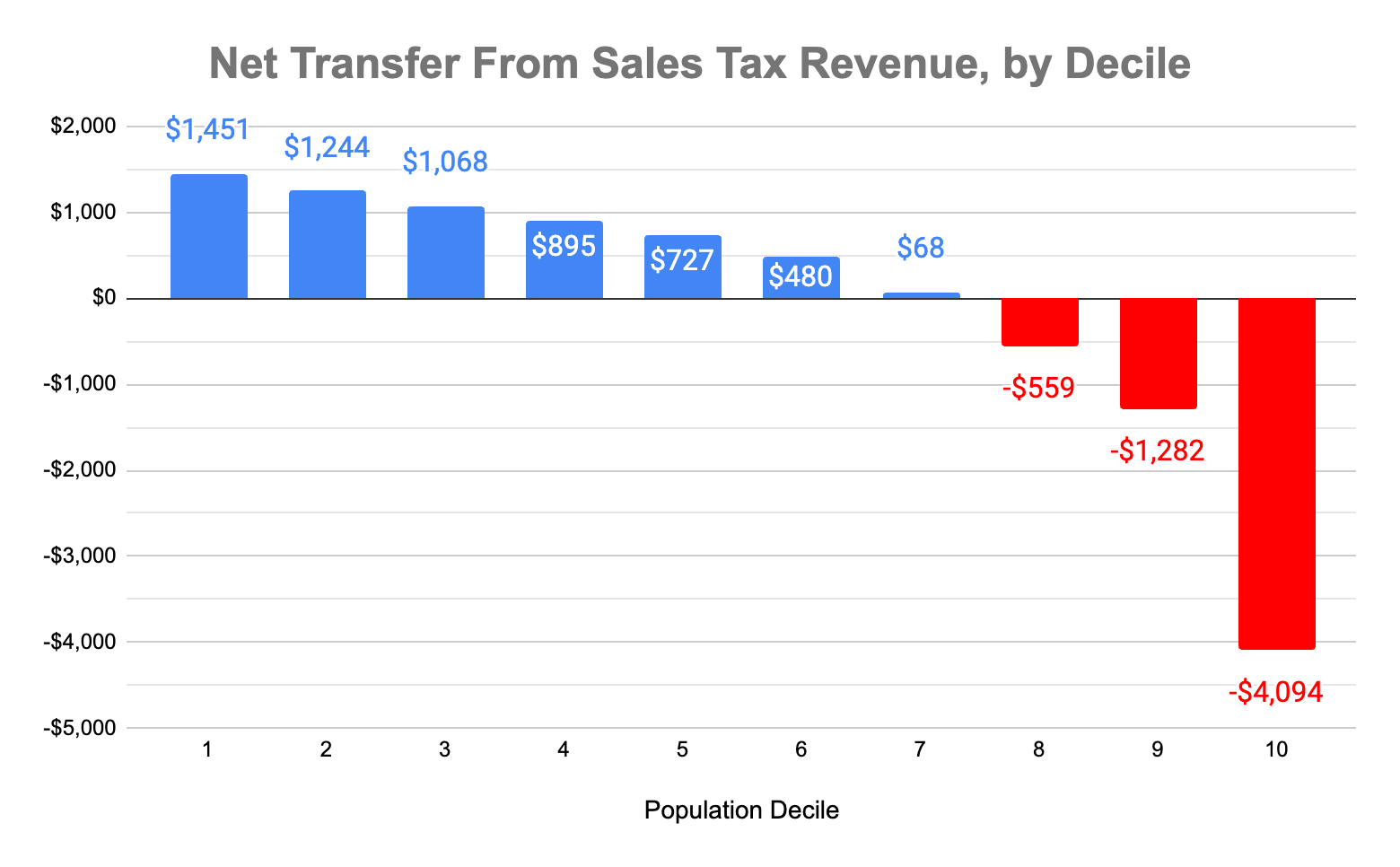
In the case of HCMC, the benefits are almost certainly more favorable to the lower end of the income distribution because of the concentration of the hospital’s services among our lowest-earning neighbors.
Don’t blame the victim (or the heroes):
HCMC is the hospital that treats everyone, regardless of ability to pay. Their patient population is the most complex in the state: 20% experience housing instability, 25% have a substance use disorder, and 25% experience food insecurity. A large majority of patients are on Medicaid, Medicare, or are uninsured, straining the hospital’s finances. Our healthcare system allows private providers to specialize in profitable treatments and leaves the costly care to safety net hospitals like HCMC.
Cutting costs/ increasing efficiency: There has been quite a bit of discussion coming from members of the House GOP caucus about what the hospital has done to lower expenses before the state gives them more funding. Since the beginning of the year, the hospital has cut 100 beds and laid off 100 staff members, paused retirement contributions, cut several programs, and committed to searching for cost-saving and revenue-raising solutions going forward.
Governance: In August of last year, the county commissioners voted to dissolve the hospital board and assume the role themselves. This has not been an ideal situation for anyone, and a priority for many legislators is the establishment of a new board that includes a mix of healthcare finance experts and community members.
But these are not the drivers of the hospital’s financial struggles.
The key point is that HCMC is not in this crisis because of mismanagement, fraud, or waste. It’s mission as our safety net hospital means that they care for the least profitable patients in the healthcare system. They operate on slim margins and cannot continue to absorb these rising costs from uncompensated care and the looming federal Medicaid cuts.
More to come…
Well, that’s probably way more info than you wanted or needed on this beautiful Friday afternoon. Thanks for reading and please feel free to reach out with questions.
Eric and Alec
All Things Public: Happy Tax Day!
Happy Tax Day!
Coming to you with a special edition filing deadline edition of All Things Public — We Make Minnesota’s newsletter on everything taxes, budgets, and public goods. Although filing taxes can be a burden (it shouldn’t be), we still appreciate Tax Day as an opportunity to reflect on the many wonderful and essential public goods and services that we all depend on.
It has continued to be a busy few weeks on tax issues here at the Capitol. But before we recap recent hearings, we thought we would provide a brief reminder on some basic tax facts that we like to keep top of mind.
Where do we stand?
Wealth inequality is at an all-time high
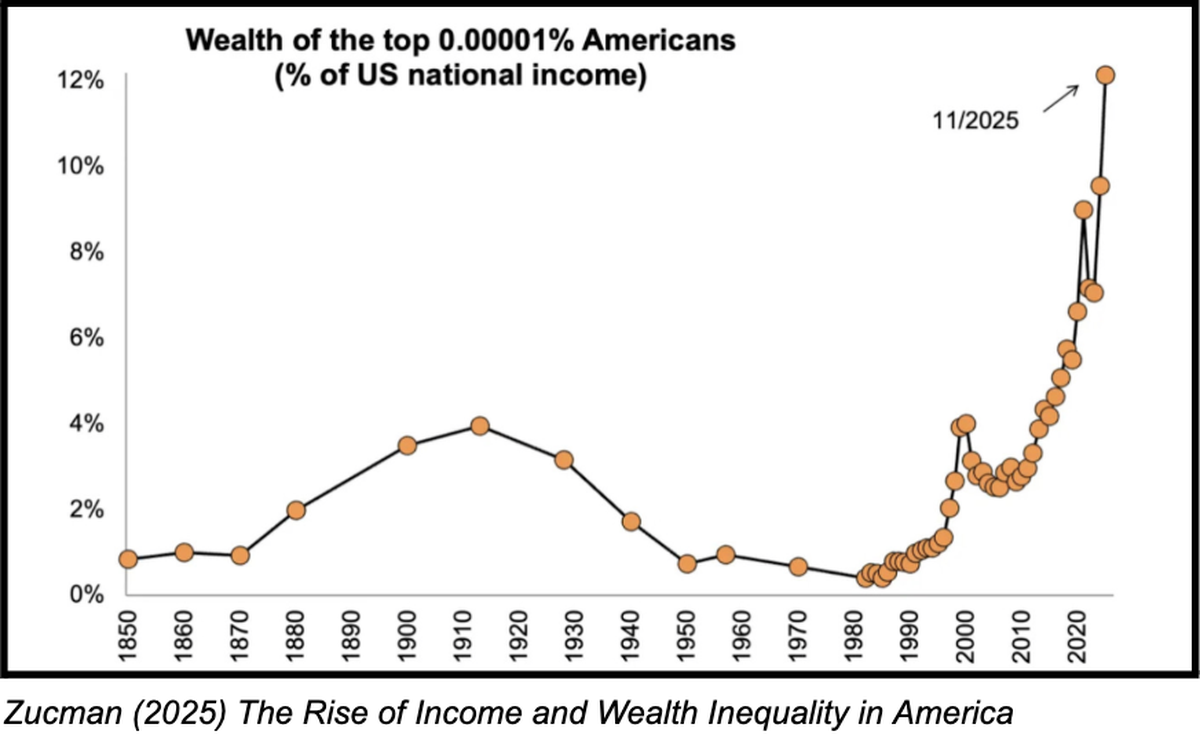
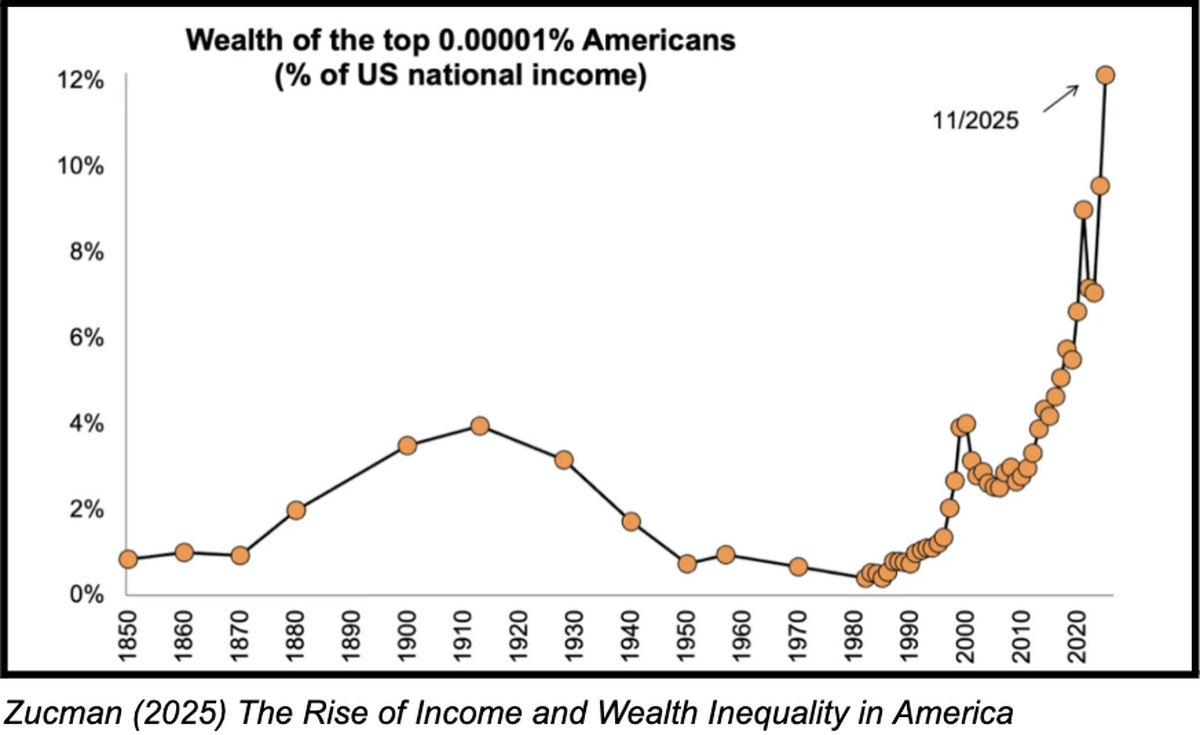
Wealth inequality has grown substantially in recent years. The chart below shows that the wealth of the top 0.00001% of Americans (19 households) is equal to 12% of all income in the country. In Minnesota, the richest 1% of residents own a third of the state’s wealth.
A lot of this wealth is in the form of assets like stocks that aren’t taxed until they are sold. Rather than selling these assets, wealthy individuals can take out loans using assets as collateral and fund their lifestyle without paying tax on that income. If heirs sell the asset after the individual dies, they don’t pay any tax on the increased value of those assets. This strategy of “buy, borrow, die” can partly explain why wealth has continued to be accumulated in the hands of a small number of ultra-wealthy households.
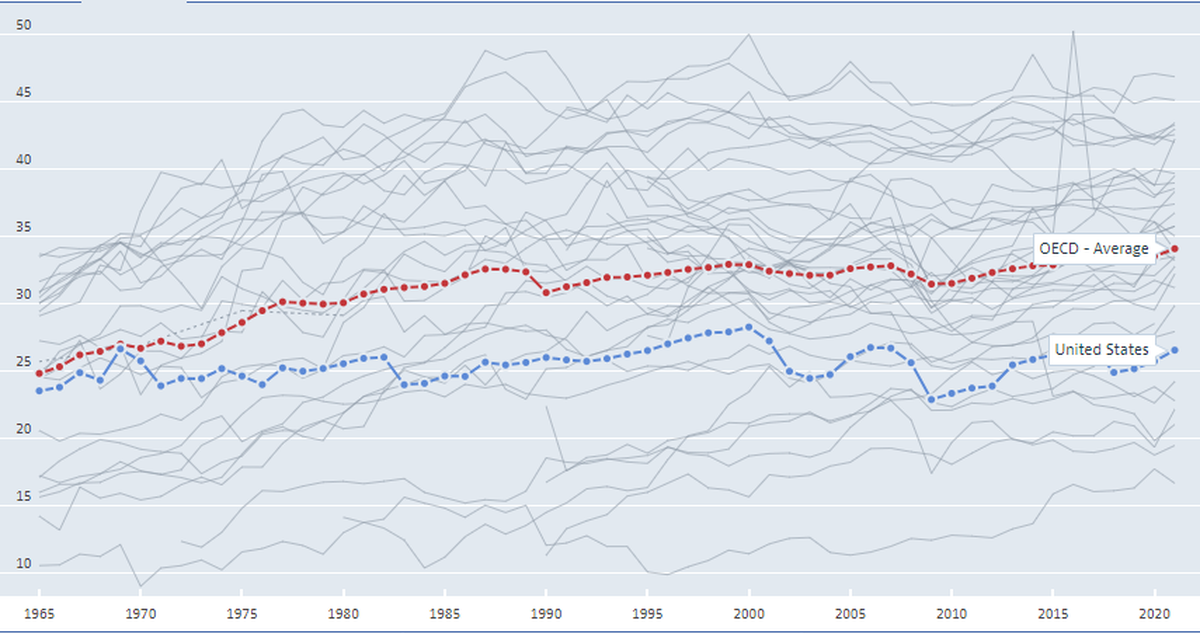
The U.S. is a low-tax country and these lower taxes are seen across the income spectrum
It is important to recognize that, despite popular political rhetoric, the US is a low-tax country compared to other developed economies. The chart below shows public spending as a share of total GDP. In the 1960s, the US was roughly in line with other major developed economies, but we have been falling behind ever since. This shouldn’t come as a surprise when we look at the public services that exist in those countries and not in ours.
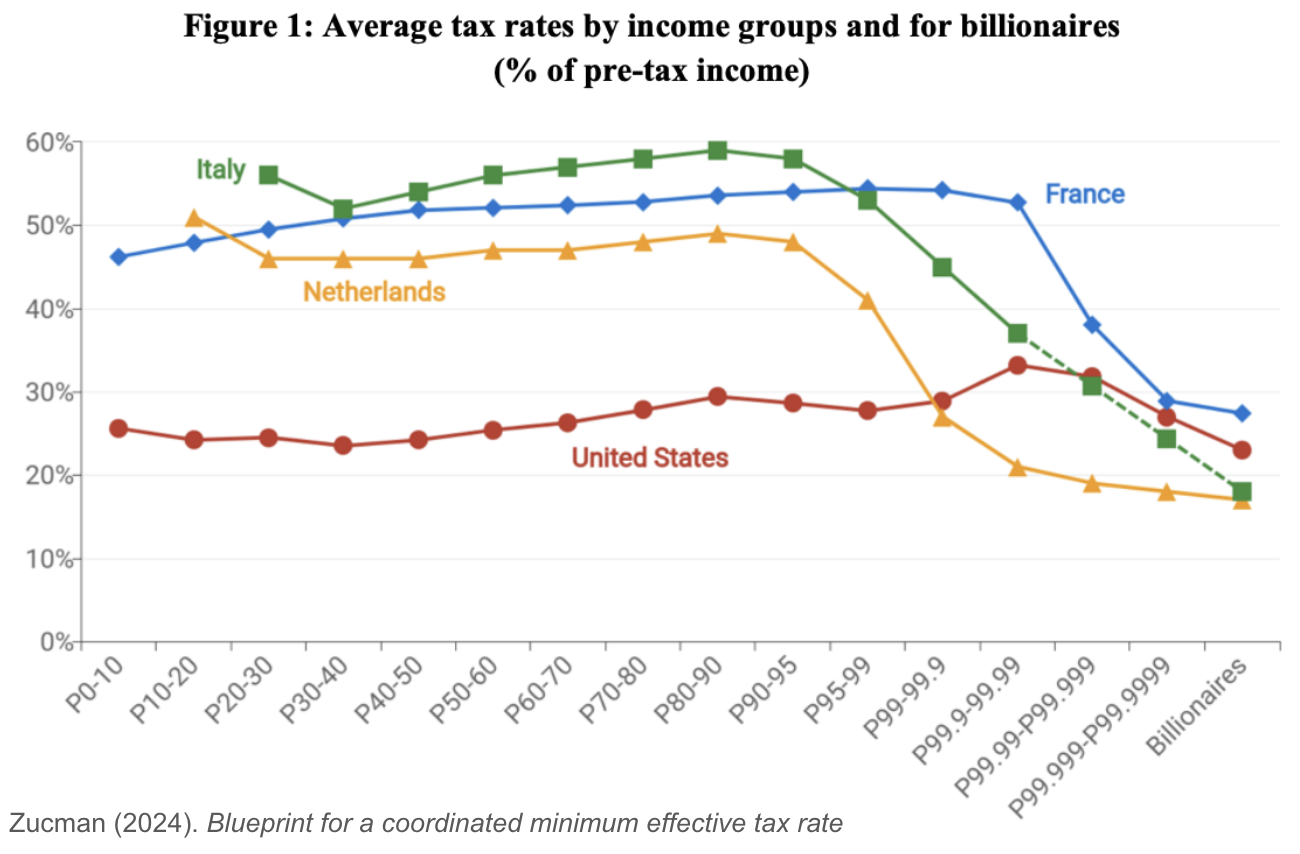
No country taxes billionaires effectively, but the US actually does a better job than other countries like Italy and the Netherlands. The key distinction in the US is the tax rates paid by most citizens. We pay less in taxes and get less in services. Middle-class citizens in many European countries pay more in taxes than their American counterparts but receive a much larger array of public services, including universal healthcare, universal childcare, and free college tuition. If we want a stronger safety net that allows all Minnesotans to thrive, it will likely require greater levels of investment across the board.
Minnesota has higher taxes, but lower non-tax revenue
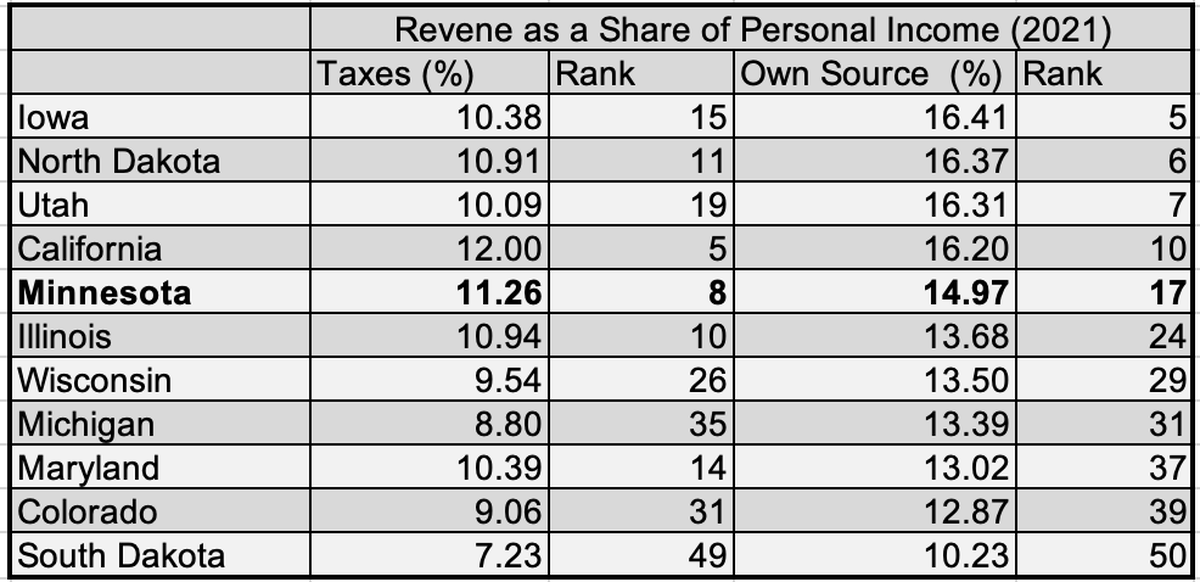
Although Minnesota is often discussed as a high-tax state, we often forget to consider the larger picture. The chart below shows that, while our statewide tax rate is indeed the 8th highest in the country, these higher taxes are offset by low collections in non-tax revenue like charges and fees. These charges and fees are inherently regressive since those costs don’t scale with income or spending like taxes do. This helps contribute to our state's ranking as the most progressive tax system in the country.
Relative to the economy, Minnesota spending has declined over time
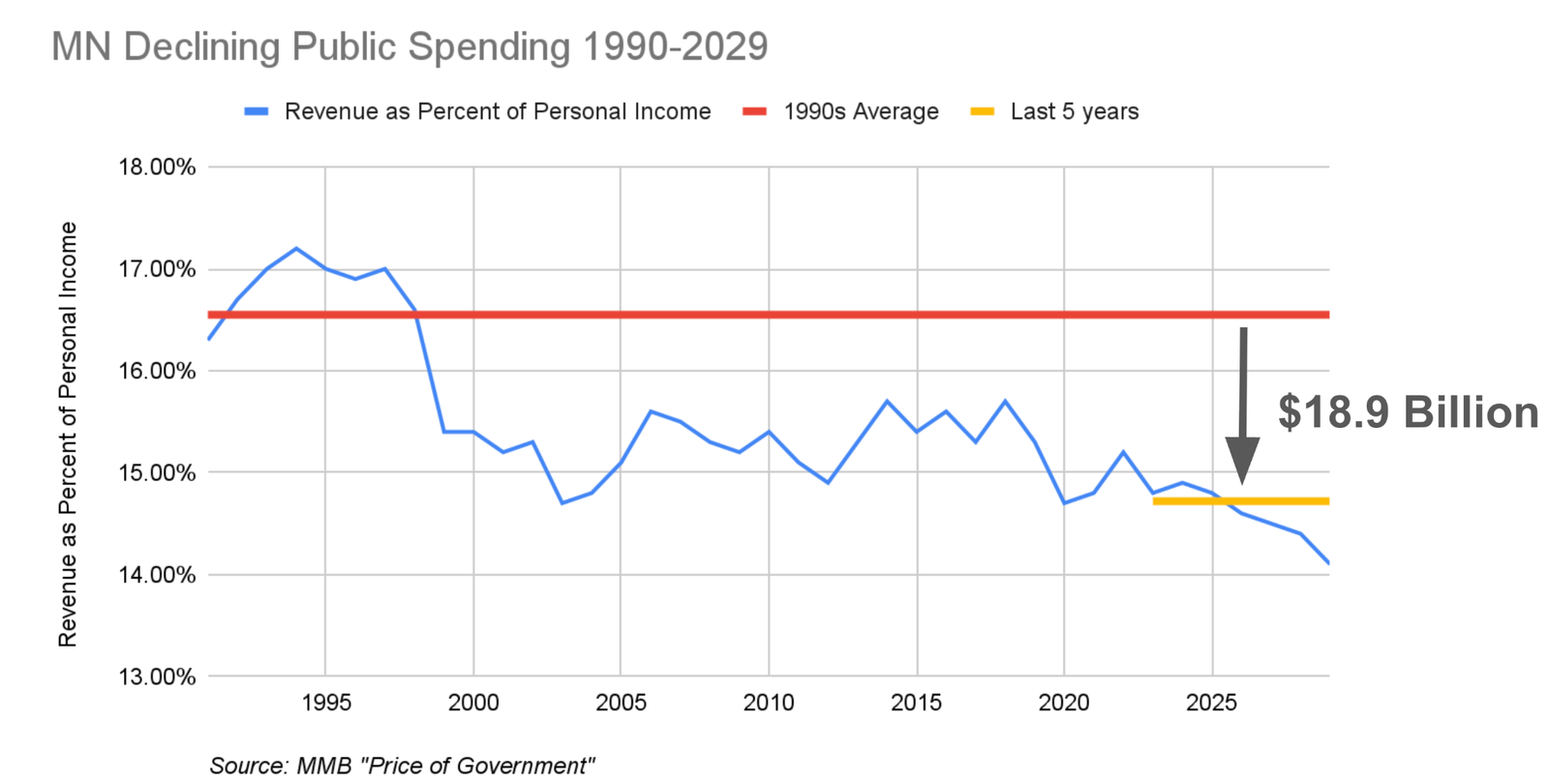
Republicans often complain about the growth of the state budget. They point out that the budget in the 2016-17 biennium was $44 billion, and ten years later, it is now $67 billion. But Minnesota’s public spending relative to the size of our economy has actually been declining since the 1990s. In fact, if Minnesota spent at the average level from the 1990s, there would be an additional $18.9 billion in this current budget. That is equal to the surplus that made the historic investments from the 23-24 legislature possible. We Make Minnesota strives to keep these conversations in proper historical context as we continue to advocate for additional revenue to meet our collective needs.
Here’s a Rundown of Recent Revenue Hearings:
House Wealth Tax Proposal
On 4/7, the House Taxes committee heard two bills that would aim to raise revenue from the wealthiest Minnesotans: HF 4123, which expands the base of the Net Investment Income Tax to include passive business income over $1 million per year, and HF 4616, a wealth tax on assets in excess of $10 million.
The bulk of that hearing was spent discussing the wealth tax. During the debate, Chair Aisha Gomez highlighted the growing wealth inequality in Minnesota and cited the rise of plasma donation clinics popping up in middle-class communities, saying that more people are selling their plasma to pay their rent. In response, Republican Rep. Patti Anderson said that she sold plasma in college to pay for tuition and “beer money.”
These proposals to tax wealth would have the richest in our society contribute a little bit more so that Minnesotans don’t have to sell plasma just to pay bills.
Senate Digital Ads Tax
Senate Tax Chair Ann Rest heard SF 4787 on 4/8, which would end the sales tax exemption for advertising services. This bill would raise $300 million from a rapidly growing sector of our economy and also lower the sales tax rate on all taxable goods and services.
Chair Rest argued that discussions about expanding the sales tax to include services like advertising are long overdue and necessary to ensure fiscal sustainability of the state budget.
Funding HCMC
HF 4841, a bill to secure funding for Hennepin County Medical Center, was heard in the House Tax Committee on 4/9. This proposal would repurpose the Hennepin County “ballpark” tax to fund the two Level 1 Trauma Centers in Hennepin County: North Memorial and HCMC. Raising the county sales tax from 0.15% to 1% would raise $342 million each year.
Senator Rest heard this bill in the Senate Taxes Committee but added an amendment that would raise the tax rate to 0.25% rather than 1%, and send additional revenue to the Twins and North Memorial Hospital.
We Make Minnesota has been vocal about the need to support HCMC and ensure its continued operation. Although no funding mechanism is perfect, there are many merits to the county-wide sales tax. Sales taxes are a stable revenue source and, in Hennepin, would draw significantly from out-of-state and out-of-county visitors, ensuring the county residents do not shoulder the cost of this statewide resource on their own.
Eliminating More Unfair Sales Tax Exemptions
Lastly, this morning, the House Taxes Committee heard HF 4738, a bill from Rep. Heather Keeler, ending the sales tax exemption on the purchase of “preferred seating” at athletic events like suites and skyboxes. This revenue would be directed to the Safe Harbor program, which supports Minnesota’s youth who have experienced sexual exploitation.
We Make Minnesota generally does not advocate for dedicated revenue, but we are in favor of policies that broaden the sales tax base to fund important public priorities. We support this bill because it asks individuals and businesses who can afford to spend thousands on better seats for sporting events to help fund a critical public program that helps our most vulnerable residents.
National News:
A new report from the CDC found that 710,000 fewer babies were born last year compared to two decades ago. We Make Minnesota’s researcher, Alec Williams, wrote about this trend back in February when the latest census data was released. Many families cite the high costs for housing, childcare, and healthcare as reasons to delay or avoid having children. There is no magic formula to reverse this trend, but the legislature should continue to advance policies that make starting a family realistic for those who want to.
The Institute of Taxation and Economic Policy (ITEP) recently has new corporate tax data, showing numerous companies across the country that didn’t pay anything in federal corporate taxes in 2025. Four of the 88 companies are from Minnesota:
3M: $1.84 billion in income
Xcel Energy: $1.75 billion
Solventum: $555 million
Winnebago Industries: $22 million
Corporate tax avoidance is not a new phenomenon, but it has been exacerbated by the corporate tax cuts in the Tax Cuts and Jobs Act from 2017 and HR 1 from last summer. These tax breaks push the burden of funding our collective needs onto working families rather than these highly profitable businesses.
That’s it for this special Tax Day edition of ATP. Wishing you healthy refunds and happy filing!
Big Revenue Week Ahead
Hello Everyone,
Happy Twins Home Opener and Good Friday to all who celebrate. It’s another jam-packed update including two exciting revenue hearings coming up next week and some more background on the urgent crisis facing HCMC. We end with a little pro-public, tax-positive message inspiration from Mayor Zohran Mamdani of New York City.
Big Week for Revenue Hearings!
We Make Minnesota is gearing up for a busy week with two hearings on priority bills.
On Tuesday, House Taxes will hear two wealth tax bills aimed at generating revenue from the wealthiest Minnesotans. With wealth inequality at an all-time high, we support bills like these, which would create a fairer tax code by making the wealthiest pay more on the returns to their fortunes. This is a priority not only for tax fairness but for social and economic stability as high enormous concentrations of wealth lead to social instability and political dysfunction.
HF 4123, authored by Rep. Esther Agbaje, expands the base of Minnesota’s existing Net Investment Income Tax (NIIT). The NIIT is a surcharge on income over $1 million per year generated from returns to wealth, such as capital gains, dividends, and other proceeds from wealth and investment holdings. This policy extends the surcharge to also cover passive business income as defined by the federal revenue code.
HF 4616, authored by Chair Aisha Gomez, is a 1% tax on assets (stocks, bonds, cash, real estate, etc.) in excess of $10 million. This is a classic Elizabeth Warren/Bernie Sanders-style wealth tax on financial assets, tangible property, and other forms of wealth. The proposal is similar to one that has been floated in Washington state. As proud as we are of our progressive income tax, WMM very much appreciates the recognition that we will never make progress on reducing inequality without some taxation of the massive accumulated fortunes of the ultra-rich.
And, as if that weren’t enough fun for one week, on Wednesday Senate Taxes will hear a new tax on advertising services. This is the companion bill to Rep. Liz Lee’s proposal in the House, which was heard before the session break.
As a reminder, Chair Rest’s SF 4787 would expand the sales tax base to include advertising services. This bill would both raise revenue and lower the sales tax rate for all taxable goods, reflecting how sales tax exemptions for things like advertising result in a higher rate on all of us. Importantly, that includes businesses using taxable inputs or selling taxable products, which contribute a full 48% of all state sales tax revenue. Why should these businesses, and all of us, pay while large platforms like Google and Meta are exempt?
You can learn more about this policy by watching our press conference from earlier this session, or check out this slick social media video posted earlier today.
Importance of HCMC
Speaking of videos, We Make Minnesota has been doing our part to tell the story of Hennepin County Medical Center and the urgent crisis that its funding struggles pose for our city and our state. Last week, we were proud to spend some time with AFSCME and MNA members from HCMC and share their thoughts through a wonderful video by our friends at LineBreak Media.
HCMC’s financial situation has been strained in recent years due to rising levels of uncompensated care, but the collapse of UCare and the anticipated cuts to Medicaid threaten to put the hospital out of business entirely. This endangers the health of the entire region, as patients from greater Minnesota and neighboring states are directed to HCMC for its Level 1 trauma center, comprehensive burn unit, and hyperbaric medicine department for lifesaving care. This is a public good we cannot go without.
It is also essential to recognize how HCMC’s care for the most vulnerable patients essentially subsidizes the profits of other hospitals, who turn these patients away.
HCMC is the state’s largest safety-net hospital, caring for a high population of uninsured and Medicaid patients who have nowhere else to get care. This puts them in a precarious financial spot compared to hospitals like Mayo, which cultivate healthy bottom lines by catering to the wealthiest people in the world and choosing which patients to treat.
In an op-ed published in the Minnesota Reformer last week, We Make Minnesota Researcher Alec Williams put it simply:
“HCMC’s financial situation was not caused by mismanagement or fraud; it results from a system that reserves basic health care for those who can afford it, leaving underfunded public hospitals to pick up the pieces, and taxpayers to pick up the bill.”
This phenomenon of privatizing the profits and socializing the costs is not unique to healthcare. We see it across industries where public sectors are left to carry the highest costs while private actors capture the gains. Addressing the HCMC’s crisis will require more than just a short-term fix; it should be the start of a broader conversation about how we fund and sustain the public goods our communities rely on.
Messaging on good government
Why not close out with something inspiring? New York City Mayor Zohran Mamdani has garnered significant media attention for unapologetically progressive politics and approachable messaging. Buta new video released this week highlights a topic that might seem unusual coming from an avowed democratic socialist — cutting down on wasteful spending.
In the video, Mayor Mamdani highlights millions of dollars in savings that New York City has generated by combatting fraud and taking outside contracts in-house. Surprising is it might seem, I believe this is a very important point for progressives to address. No one should be more protective of public dollars than those of us advocating for more of them.
Or, as Mayor Mamdani put it, “To deliver public goods, we first have to deliver public excellence.” Couldn’t agree more.
We Make Minnesota has encouraged a growing conversation about the role that outsourcing public services has played in enabling fraud, and this message is highly compatible with what is coming out of NYC. With budget challenges ahead, we will need new and even bigger ideas for how to get more value out of our tax dollars. We Make Minnesota welcomes that conversation.
Ok, that’s enough for this week. We are not even going to comment on the confusing and unproductive assertion by our sitting governor that Minnesota should avoid additional taxes on the highest-earners. At a time of extreme inequality, in a state reeling from attacks on our most vulnerable communities, this seems tone deaf.
Thankfully, polling routinely shows Minnesotans and Americans in general support higher taxes on those making the most. More on that coming soon.
Thanks for reading!
Eric
Hennepin County Medical Center is an important statewide asset and must be saved
Originally published in the Minnesota Reformer, March 24, 2026, by Alec Williams.
Good news on people moving to Minnesota, but larger population challenges loom
Originally published in the Minnesota Reformer, February 20, 2026, by Alec Williams.
All Things Public, 12/5: Budget Forecast Time
All Things Public 12-5
Allies and Advocates!
Hello and happy December! In this newsletter, we give our analysis on some of the biggest headlines affecting our state.
Budget Forecast Time!
Today, the Minnesota Management and Budget office released the November Budget and Economic Forecast. Here are some topline takeaways:
- An immediate one-time surplus of $2.4 billion for the 2024-25 biennium, which is almost $600 million more than expected.
- A projected shortfall of just under $3 billion by the close of the 2028-29 biennium with $935 million of discretionary inflation included.
- For 2028-29, our structural imbalance — the difference between money coming in and going out — has increased by about $2.4 billion, from just under $3 billion to about $5.4 billion. Around $1.8 billion of this is due to increased forecast spending and a little over $500 million is due to decreased revenue expectations.
Overall, this is pretty bad news. The impact of these higher projected spending and lower projected revenues is to effectively erase the impact of 2025 legislative changes that were aimed at closing our long-term structural imbalance. The predicted shortfall is still years away, but continued growth in costs in Medicaid and other HHS programs is revealing itself to be an enormous, growing challenge. If you don’t want to cut services in the near future, or want to pass new investments in Minnesotans’ growing needs, we will need to raise significant revenue.
On the other hand, we are not alone. The vast majority of states are facing decreased revenues, and many are in a similar position than us with a projected shortfall. We Make Minnesota will be diving deeper into this forecast and the source of growing HHS costs in future newsletters and events.
In the News: Chamber of Commerce says “Minnesota Economy Bad”
You might have seen the Chamber of Commerce report last week that shows slow growth in Minnesota’s economy. The Chamber ascribes this stagnation to lost residents; federal policy such as tariffs and workforce cuts; and the lack of easy room to grow given our already-strong economy. Yes, we should be concerned about per-capita income increasing slower than other states, but some of the other states had a minimum wage of $2.75 just a decade ago, and can grow faster due to their lower starting point.
While the report cites the expected solutions of deregulation and lower taxes, it also acknowledges cost-of-living challenges in housing, healthcare and childcare. Despite slower growth than other states, Minnesota remains a desirable place to live and work because of our investment in public services - that’s why we retain a large number of Fortune 500 companies and have a better quality of life. This has always been our competitive advantage and we need to keep investing in people and communities to maintain it.
Wealth inequality is also an economic factor that you won’t see the Chamber talking about. This year, inequality grew to the point that the wealthiest 1% of Minnesotans own a third of our state’s wealth. In many cases around the world, increased wealth inequality has been shown to slow economic growth. This is especially true when the wealth of the top 1% booms and hoards while lower-middle class families have less money to spend. Business can’t be sustained with less consumers, because less people will have money to spend. (Source)
In summary, rather than answering a slowing economy with tax cuts and deregulation, we should be talking about:
1. Wealth inequality, how to raise wages and combat corporate greed, and;
2. The downstream effects of harmful federal legislation that has plunged every state into economic chaos.
3. The importance of strong, sustainable growth as opposed to GDP for its own sake. As Rep. Aisha Gomez, “economic growth” can include car crashes, house fires, and predatory loan schemes, so not every dollar is equal.
We share this analysis because we’re sure a lot of you will be hearing about this report from the Chamber as the bedrock of their anti-tax legislative platform. If you have any questions about further bringing in this analysis when asked about it, please reach out.
Treasury Investigates Minnesota Fraud Case
Fraud stories continue to bring in headlines, especially as Trump directs the Treasury to investigate whether Minnesota tax dollars have been sent to foreign terrorist groups. It’s a reach and an attention-getting notion from the right because some of the fraudsters were Somali. Now it has become a pretext for ICE to target another group of our immigrant neighbors. That being said, I’m including this story in this newsletter because fraud narratives are the right’s best argument for cutting public funding and sowing distrust in government.
We need to be mad about fraud, and we can’t avoid talking about it. We have to be responsible stewards of Minnesota tax dollars - making sure that our investments directly benefit Minnesotans who need it.
Feeding Our Future is an example of how hastily distributed band-aid grants to unaccountable non-profits was exacerbated by a lack of oversight by our state agencies. Once red flags were raised by the Minnesota Department of Education due to a spike in claims, Feeding Our Future sued the state agency to keep the funds flowing.
From FoF, to Housing Stabilization Services, to Autism Services, to CCAP - Minnesota has not been protective enough of our public funds. Criminals who took advantage of our slow system and lack of oversight pocketed millions of dollars at the expense of those who needed them. Every case of fraud builds a narrative that conservatives use to defund and destroy essential government services. Highlighting fraud cases is one way that conservatives take the high ground on “economic responsibility,” while they remain complicit or even primarily responsible for the weakening of public institutions and many of them participate in crony capitalism, giving handouts to wealthy friends and corporations.
It’s imperative that we build back trust in our public systems. Minnesotans deserve to know that their elected leaders care, and that they’re doing everything they can to avoid fraud in the future. We need a strong state budget that can meet peoples’ needs - and we can’t have people thinking our state budget is a leaky bucket. If you want to be part of our push to directly address and prevent fraud, please reach out.
States Resist Federal Tax Cuts
As federal tax cuts threaten states’ budgetary bottom lines, we’re seeing some states moving to decouple themselves from federal laws. Delaware just saved themselves from a $410 million shortfall by refusing to conform to corporate tax breaks included in the federal budget bill. Pennsylvania did the same, while also passing a working class tax credit for low-income individuals. Keep this in mind as conformity discussions come up - the fight against these corporate tax breaks were successful because state legislators positioned themselves against the large handouts to the ultra-wealthy and corporations.
For more information on current tax news from other states, read the Institute on Taxes and Economic Policy’s State Rundown.
Reading Material of the Week
Speaking of ITEP, if you haven’t yet, please take some time to read their annual “Who Pays?” report. It’s a great resource for any student of taxes and public funding, and reviews how states stack up regarding inequality and taxes.
Thank you for reading this newsletter, and as always, stay in touch!
Eric and Lindy