All Things Public: Happy Tax Day!
Happy Tax Day!
Coming to you with a special edition filing deadline edition of All Things Public — We Make Minnesota’s newsletter on everything taxes, budgets, and public goods. Although filing taxes can be a burden (it shouldn’t be), we still appreciate Tax Day as an opportunity to reflect on the many wonderful and essential public goods and services that we all depend on.
It has continued to be a busy few weeks on tax issues here at the Capitol. But before we recap recent hearings, we thought we would provide a brief reminder on some basic tax facts that we like to keep top of mind.
Where do we stand?
Wealth inequality is at an all-time high
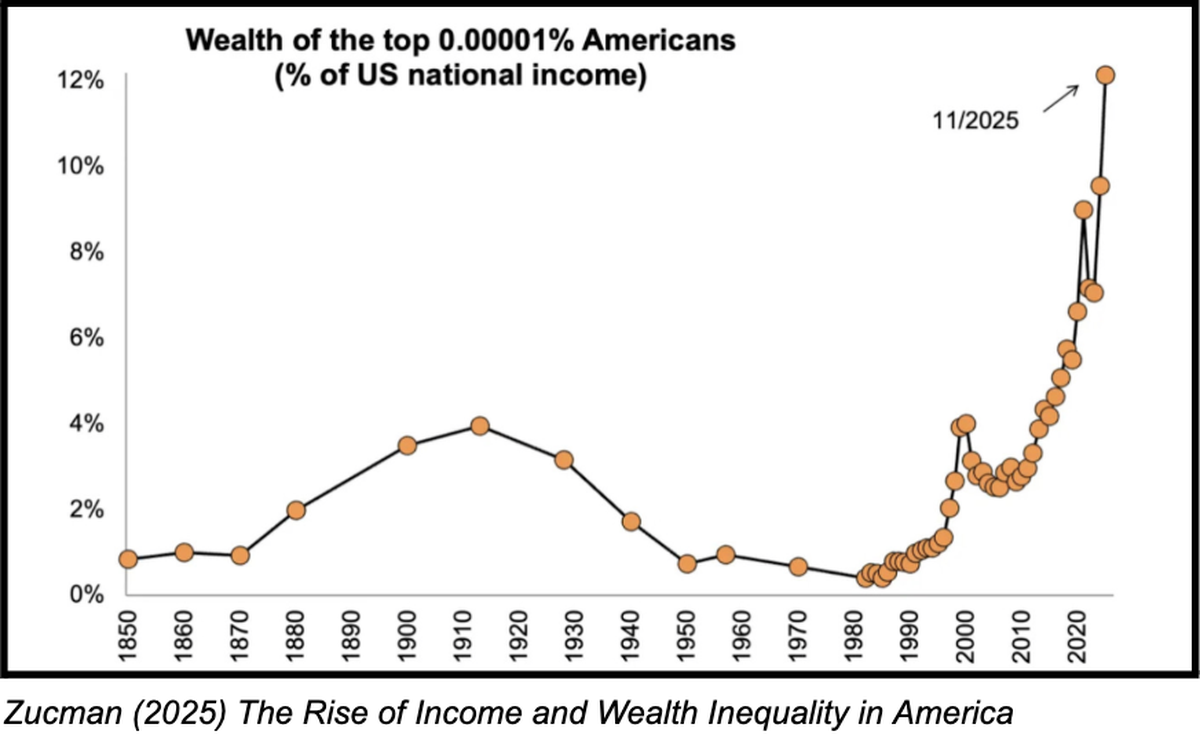
Wealth inequality has grown substantially in recent years. The chart below shows that the wealth of the top 0.00001% of Americans (19 households) is equal to 12% of all income in the country. In Minnesota, the richest 1% of residents own a third of the state’s wealth.
A lot of this wealth is in the form of assets like stocks that aren’t taxed until they are sold. Rather than selling these assets, wealthy individuals can take out loans using assets as collateral and fund their lifestyle without paying tax on that income. If heirs sell the asset after the individual dies, they don’t pay any tax on the increased value of those assets. This strategy of “buy, borrow, die” can partly explain why wealth has continued to be accumulated in the hands of a small number of ultra-wealthy households.
The U.S. is a low-tax country and these lower taxes are seen across the income spectrum
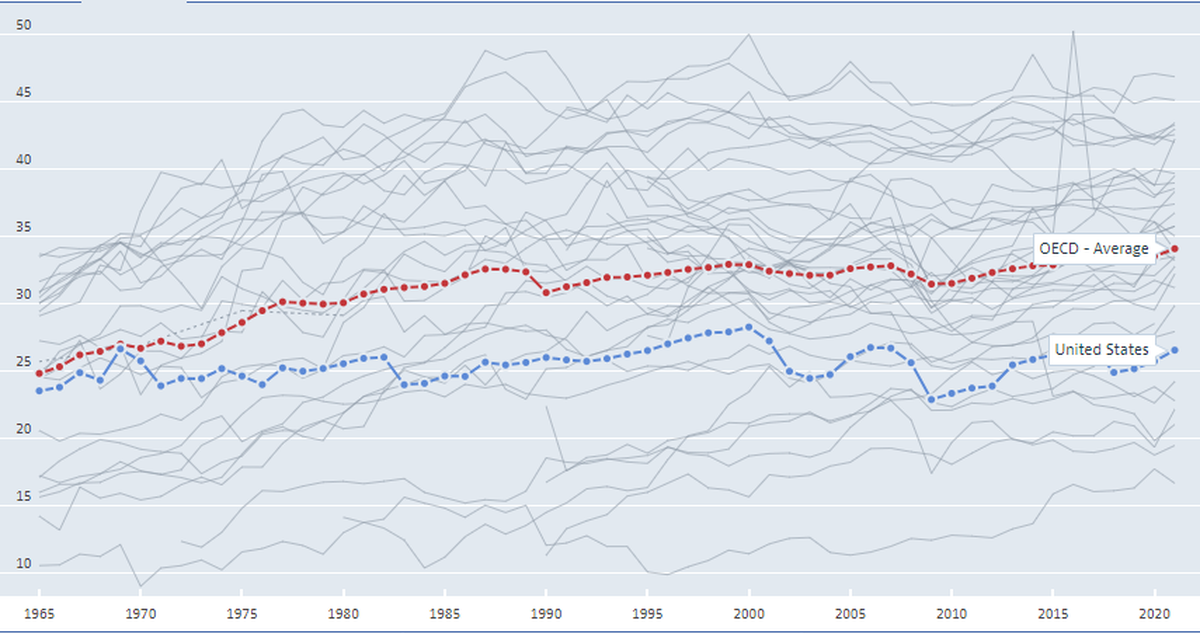
It is important to recognize that, despite popular political rhetoric, the US is a low-tax country compared to other developed economies. The chart below shows public spending as a share of total GDP. In the 1960s, the US was roughly in line with other major developed economies, but we have been falling behind ever since. This shouldn’t come as a surprise when we look at the public services that exist in those countries and not in ours.
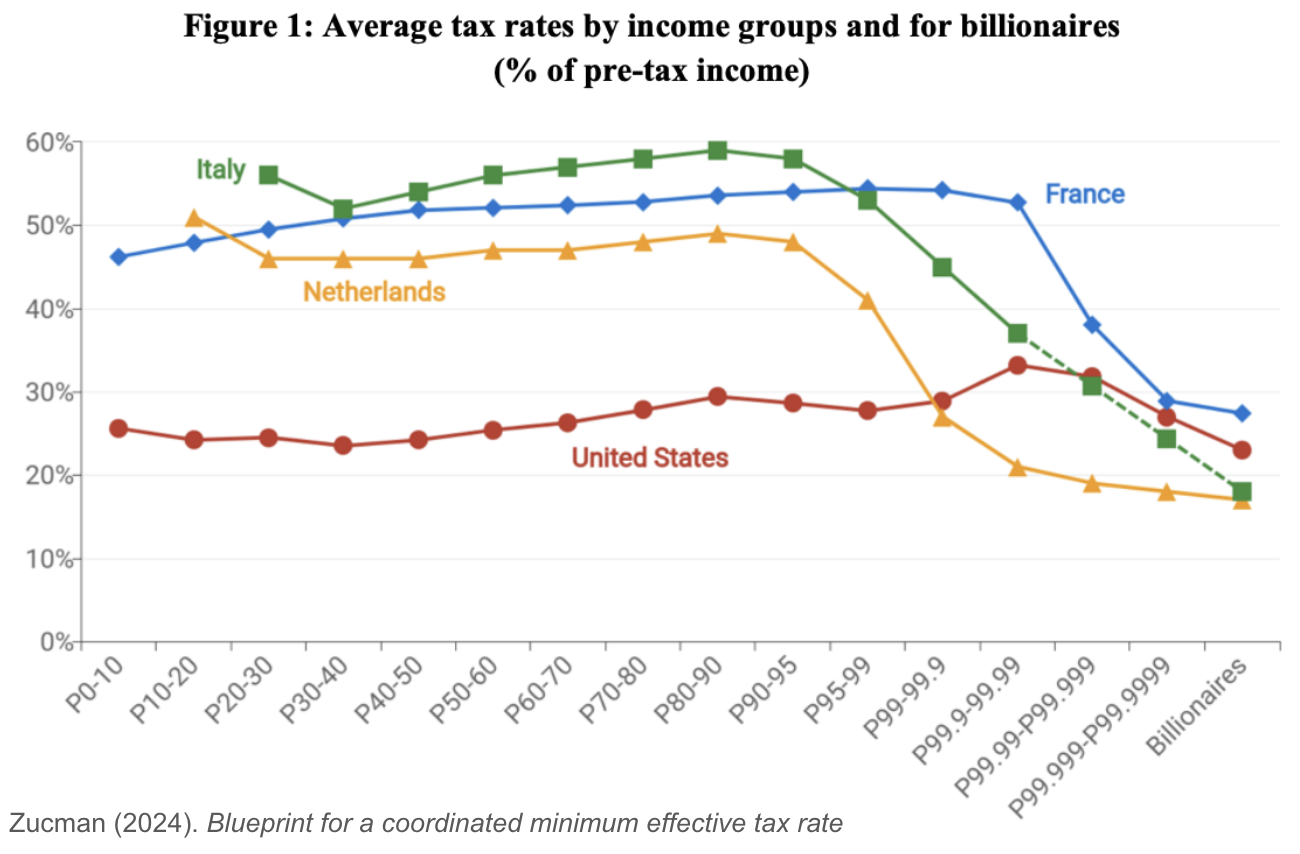
No country taxes billionaires effectively, but the US actually does a better job than other countries like Italy and the Netherlands. The key distinction in the US is the tax rates paid by most citizens. We pay less in taxes and get less in services. Middle-class citizens in many European countries pay more in taxes than their American counterparts but receive a much larger array of public services, including universal healthcare, universal childcare, and free college tuition. If we want a stronger safety net that allows all Minnesotans to thrive, it will likely require greater levels of investment across the board.
Minnesota has higher taxes, but lower non-tax revenue
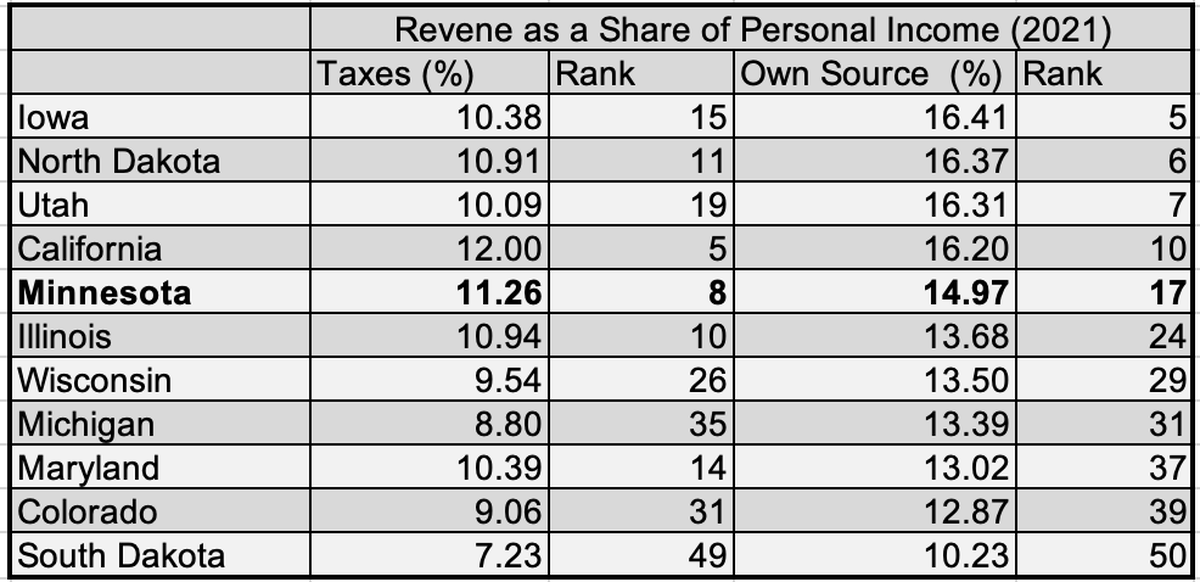
Although Minnesota is often discussed as a high-tax state, we often forget to consider the larger picture. The chart below shows that, while our statewide tax rate is indeed the 8th highest in the country, these higher taxes are offset by low collections in non-tax revenue like charges and fees. These charges and fees are inherently regressive since those costs don’t scale with income or spending like taxes do. This helps contribute to our state's ranking as the most progressive tax system in the country.
Relative to the economy, Minnesota spending has declined over time
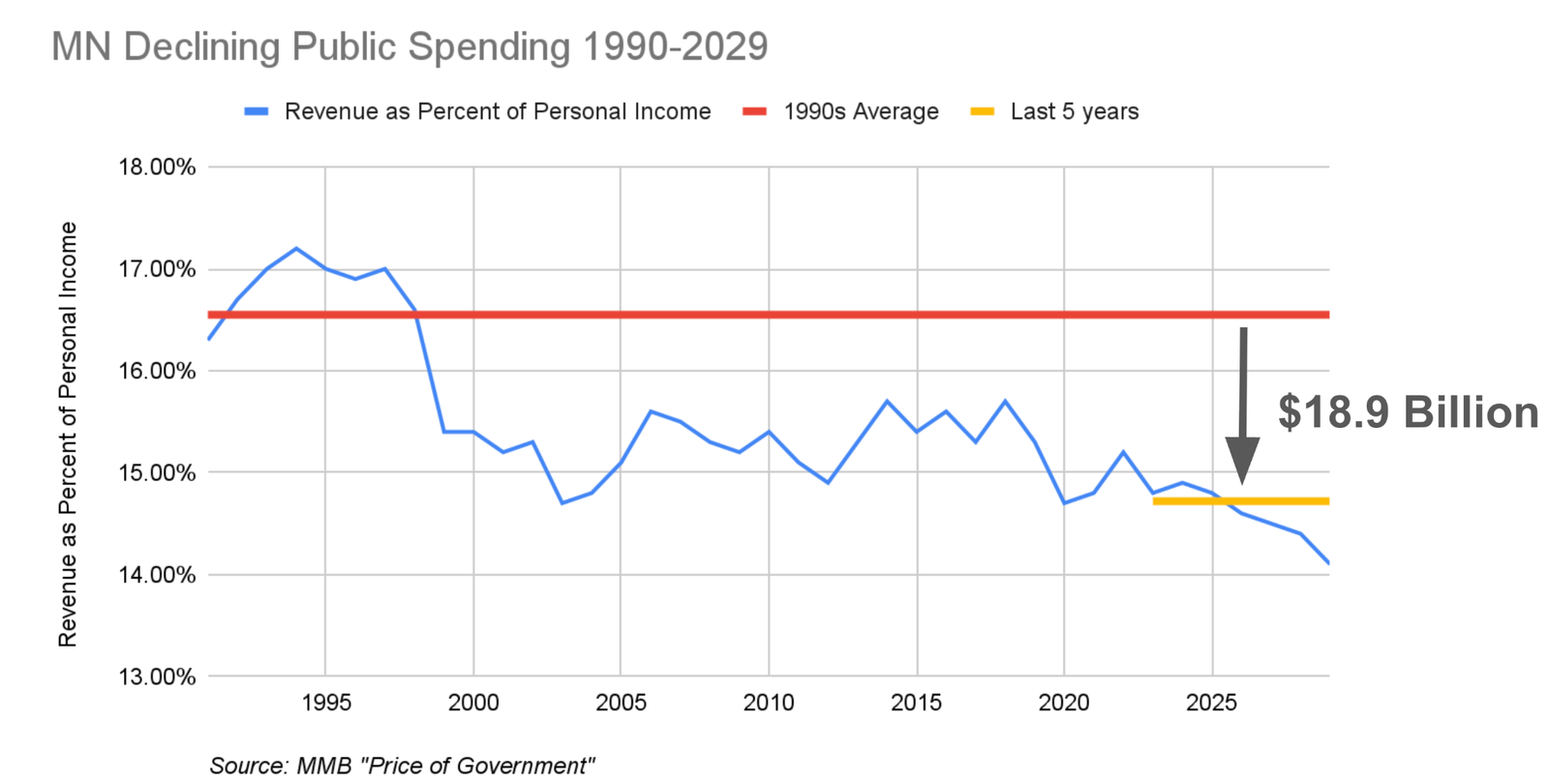
Republicans often complain about the growth of the state budget. They point out that the budget in the 2016-17 biennium was $44 billion, and ten years later, it is now $67 billion. But Minnesota’s public spending relative to the size of our economy has actually been declining since the 1990s. In fact, if Minnesota spent at the average level from the 1990s, there would be an additional $18.9 billion in this current budget. That is equal to the surplus that made the historic investments from the 23-24 legislature possible. We Make Minnesota strives to keep these conversations in proper historical context as we continue to advocate for additional revenue to meet our collective needs.
Here’s a Rundown of Recent Revenue Hearings:
House Wealth Tax Proposal
On 4/7, the House Taxes committee heard two bills that would aim to raise revenue from the wealthiest Minnesotans: HF 4123, which expands the base of the Net Investment Income Tax to include passive business income over $1 million per year, and HF 4616, a wealth tax on assets in excess of $10 million.
The bulk of that hearing was spent discussing the wealth tax. During the debate, Chair Aisha Gomez highlighted the growing wealth inequality in Minnesota and cited the rise of plasma donation clinics popping up in middle-class communities, saying that more people are selling their plasma to pay their rent. In response, Republican Rep. Patti Anderson said that she sold plasma in college to pay for tuition and “beer money.”
These proposals to tax wealth would have the richest in our society contribute a little bit more so that Minnesotans don’t have to sell plasma just to pay bills.
Senate Digital Ads Tax
Senate Tax Chair Ann Rest heard SF 4787 on 4/8, which would end the sales tax exemption for advertising services. This bill would raise $300 million from a rapidly growing sector of our economy and also lower the sales tax rate on all taxable goods and services.
Chair Rest argued that discussions about expanding the sales tax to include services like advertising are long overdue and necessary to ensure fiscal sustainability of the state budget.
Funding HCMC
HF 4841, a bill to secure funding for Hennepin County Medical Center, was heard in the House Tax Committee on 4/9. This proposal would repurpose the Hennepin County “ballpark” tax to fund the two Level 1 Trauma Centers in Hennepin County: North Memorial and HCMC. Raising the county sales tax from 0.15% to 1% would raise $342 million each year.
Senator Rest heard this bill in the Senate Taxes Committee but added an amendment that would raise the tax rate to 0.25% rather than 1%, and send additional revenue to the Twins and North Memorial Hospital.
We Make Minnesota has been vocal about the need to support HCMC and ensure its continued operation. Although no funding mechanism is perfect, there are many merits to the county-wide sales tax. Sales taxes are a stable revenue source and, in Hennepin, would draw significantly from out-of-state and out-of-county visitors, ensuring the county residents do not shoulder the cost of this statewide resource on their own.
Eliminating More Unfair Sales Tax Exemptions
Lastly, this morning, the House Taxes Committee heard HF 4738, a bill from Rep. Heather Keeler, ending the sales tax exemption on the purchase of “preferred seating” at athletic events like suites and skyboxes. This revenue would be directed to the Safe Harbor program, which supports Minnesota’s youth who have experienced sexual exploitation.
We Make Minnesota generally does not advocate for dedicated revenue, but we are in favor of policies that broaden the sales tax base to fund important public priorities. We support this bill because it asks individuals and businesses who can afford to spend thousands on better seats for sporting events to help fund a critical public program that helps our most vulnerable residents.
National News:
A new report from the CDC found that 710,000 fewer babies were born last year compared to two decades ago. We Make Minnesota’s researcher, Alec Williams, wrote about this trend back in February when the latest census data was released. Many families cite the high costs for housing, childcare, and healthcare as reasons to delay or avoid having children. There is no magic formula to reverse this trend, but the legislature should continue to advance policies that make starting a family realistic for those who want to.
The Institute of Taxation and Economic Policy (ITEP) recently has new corporate tax data, showing numerous companies across the country that didn’t pay anything in federal corporate taxes in 2025. Four of the 88 companies are from Minnesota:
3M: $1.84 billion in income
Xcel Energy: $1.75 billion
Solventum: $555 million
Winnebago Industries: $22 million
Corporate tax avoidance is not a new phenomenon, but it has been exacerbated by the corporate tax cuts in the Tax Cuts and Jobs Act from 2017 and HR 1 from last summer. These tax breaks push the burden of funding our collective needs onto working families rather than these highly profitable businesses.
That’s it for this special Tax Day edition of ATP. Wishing you healthy refunds and happy filing!