All Things Public, 5/22: What’s next?
[We Make Minnesota] All Things Public, 5/22: What’s next?
Legislators, Partners, Allies, and Staff:
Wishing you all a happy Memorial Day with the requisite session retrospective and a few thoughts on the challenges and opportunities ahead. We’ll start with the forward-looking piece, for those of you who have had your fill of rehashing the past.
Looking Ahead to 2027
The 2025 and 2026 budget deals substantially reduced the state’s structural deficit. Unfortunately, they did so largely at the expense of local governments and programs that Minnesotans depend on. Expanded property tax refunds will be celebrated by DFL and GOP alike, but they are a band-aid on the growing gap between our needs and our means. Much of that is due to federal policy changes, but the responsibility falls nonetheless on state and local actors to figure out a way forward.
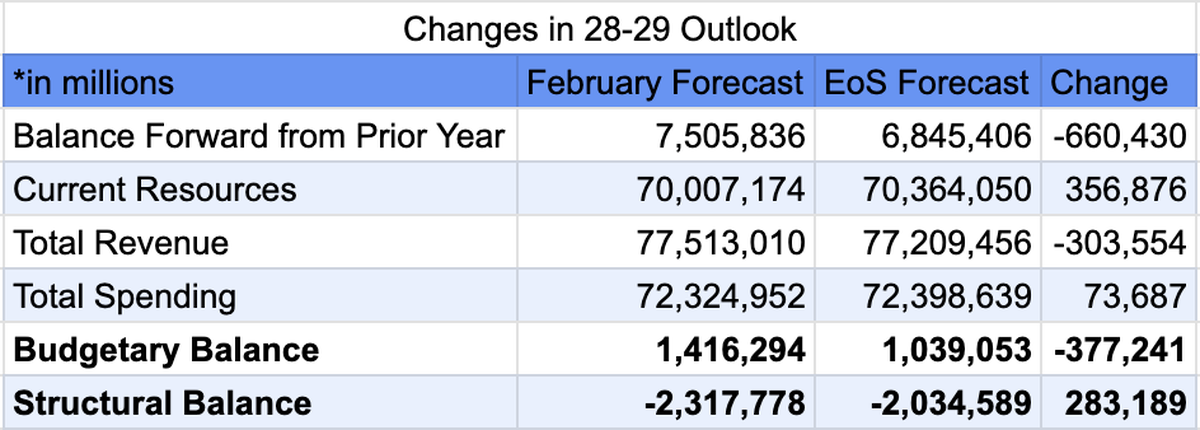
After changes passed in 2026, the 2027 legislature will take up its business with an ending balance of $1 billion projected for the 28-29 biennium, which is less than the $1.4 billion surplus forecasted in February. However, much of that is due to one-time spending. By increasing tax revenue through federal tax conformity, legislators reduced the structural imbalance from $2.3 billion to $2.03 billion. What will that mean for 2027?
In 2023, DFLers in the House and Senate inherited a $17 billion surplus. They used this substantial sum to cut taxes for lower-income Minnesotans and make important investments in schools, healthcare workers, infrastructure, and more. But in the years since, some of the glow of these budget victories has faded — historic school funding was consumed by rising healthcare costs; funding intended for new housing programs sits unused; and fraud resulting from outsourcing has overshadowed important investments in state Medicaid programs.
2027 will have to be different. To regain public trust and truly deliver for Minnesotans, we will have to focus more on the how — not coincidentally this is the mantra of Ted Kolderie, a prominent architect of the original Minnesota Miracle. The ‘how’ will include more revenue and a fairer tax code. But it will also necessitate an honest assessment of the ways in which our governing mechanisms have weakened over time or failed to keep pace with a modern society.
The battle to save HCMC portends the sort of structural challenges that will only become more common in the years ahead. How many other hospitals will begin to buckle under the pressure of increasing uncompensated care and inflationary pressures? How will families respond to the astronomical cost of childcare? How will we maintain adequate infrastructure as gas tax revenues continue to decline? We need bold, holistic responses to these struggling systems.
As a coalition dedicated to the importance of collective action through democratic institutions, We Make Minnesota hopes to be an enthusiastic participant in those conversations.
As for Session…
For We Make Minnesota, the major revenue and spending pieces were top of mind. Although the final tax deal gave more away than good budgeting would recommend, it was better than what we might have expected given split control and the GOP’s thirst for tax cuts. The $400+ million price tag of the major tax cuts (offset by new revenue) included in the omnibus tax bill will reduce funds rolled over into the next biennium, but this impact pales in comparison to cuts passed during some other split-control sessions.
I’m thinking back to 2021, when the state gave businesses a $700 million double-dip tax break on PPP loans, which did not save jobs and specifically benefited the people who needed it least. Or, in 2022, when the state used $2.7 billion (!) of general fund dollars to refill our unemployment insurance trust fund rather than letting rates adjust per statute.
By those standards, DFLers in the House and Senate did a good job of protecting our state budget’s integrity. The upside of a tighter budget window is that it minimizes wasteful cuts.
Here are some notes on the major tax and budget items, which include:
Funding for HCMC
$1.2 billion in bonding
A $254 million 1-year reduction in tab fees
$90 million for updating IT systems
Increased homestead property tax refunds
Tax deal with a net general fund loss of $24.1 million in 2026-27 but a gain of $342.2 million in 2028-29
Other wins sustained investment in free filing programs and homeless prevention aid
HCMC Funding:
The Health bill includes $205 million for HCMC and a $500M reserve account that can be accessed with legislative approval if the hospital certifies that it is nearing insolvency. $120 million currently slated to be used for a new rail line from the Twin Cities to Duluth could be used to fill this fund if the project does not receive federal grant funding by 2028.
The legislation did not make any modifications to the 0.15% Hennepin County sales tax, which will remain in effect until the construction bonds for Target Field are paid off. Until then, it will also continue funding extended library hours in Hennepin County, youth sports initiatives, and the operations of the ballpark authority.
We Make Minnesota and several of our partners celebrated HCMC funding as much-needed reassurance for hospital staff and an important step towards stability for Minnesota’s most important hospital. It is not a permanent fix, but it gives the legislature time to return next year to construct a more durable solution. We were honored to be present at a press conference celebrating the victory yesterday and hope that state leaders will continue to center the importance of public institutions in their message and platform going forward.
Bonding Bill:
The legislature passed a $1.24 billion capital investment bill, including $420 million for water infrastructure, $177 million for transportation, and $75 million for the University of Minnesota. It also includes funding for asset preservation at Minnesota State, local road improvement fund grants, improvements to the Roy Wilkins Auditorium in St. Paul, and many other local projects.
The $420 million for water infrastructure was a bipartisan priority and is crucial to help local governments build facilities to manage wastewater and drinking water. These facilities are a great example of the most basic needs that can be met only with collective funding.
Vehicle Tab Fees:
Minnesota has the 4th largest road system in the country, and our weather makes the maintenance of those roads more expensive than in most states. This maintenance is funded through mechanisms like the per-gallon gas tax, sales tax on the purchase of vehicles, and annual vehicle registration fees, aka “tab fees”.
As vehicles become more fuel efficient and the share of electric cars increases, the revenue from the gas tax will decrease. These electric vehicles are also heavier than gas vehicles, resulting in more wear and tear for our roads and bridges. The rising costs and decreasing revenues spurred legislators to increase tab fees to make sure we can afford to maintain our transportation infrastructure.
Lowering these tab fees had been a sticking point for GOP legislators this session, which explains why this agreement includes a 1-year reduction in those fees, starting on Jan. 1, 2027. The reduction will be paid for using General Fund dollars and won’t take money away from roads and bridges. This tax reduction will put some money back in the pockets of Minnesotans, but most of the benefits will go to those with more expensive cars, and the cuts will hurt our ability to meet our basic infrastructure funding needs.
IT Funding:
Workers from counties and state agencies came to the Capitol multiple times this session to demonstrate the outdated technology that they have been using to administer public programs like MinnesotaCare. Much of this software is from the 1980s and has been chided for resembling the old “Oregon Trail” video game.
It can take up to two years for a new employee to become proficient in its use, and counties claimed that roughly half of those employees get frustrated trying to learn the antiquated software and quit before their training is complete. Earlier in the session, it was estimated that a complete overhaul of the state and county IT systems could cost roughly $500 million. This bipartisan deal is not that expansive, but it will provide $90 million over the next three years to modernize IT systems across the state.
Property Tax Refunds:
The budget deal included $125 million in one-time property tax refunds for roughly 600,000 homeowners with a household income under $143,000. The average household will get $171 from this deal.
Similar to the tab fee reduction, this temporary benefit does not address the structural problems that create higher property taxes. Local government aid has been steadily decreasing as a share of the state’s general fund and federal cuts have increased costs for local governments. Using statewide revenue to alleviate the burden and inequity of local taxes was a cornerstone of the original Minnesota Miracle, but this strategy is not sustainable without policies to strengthen revenue collections at the state level.
In Other News…
Taxes have become a more prominent topic as we approach the 2026 election season and candidates jockey for position on widespread cost-of-living concerns. We are seeing some good ideas, like how to tax the rich, but also a good amount of bad ones.
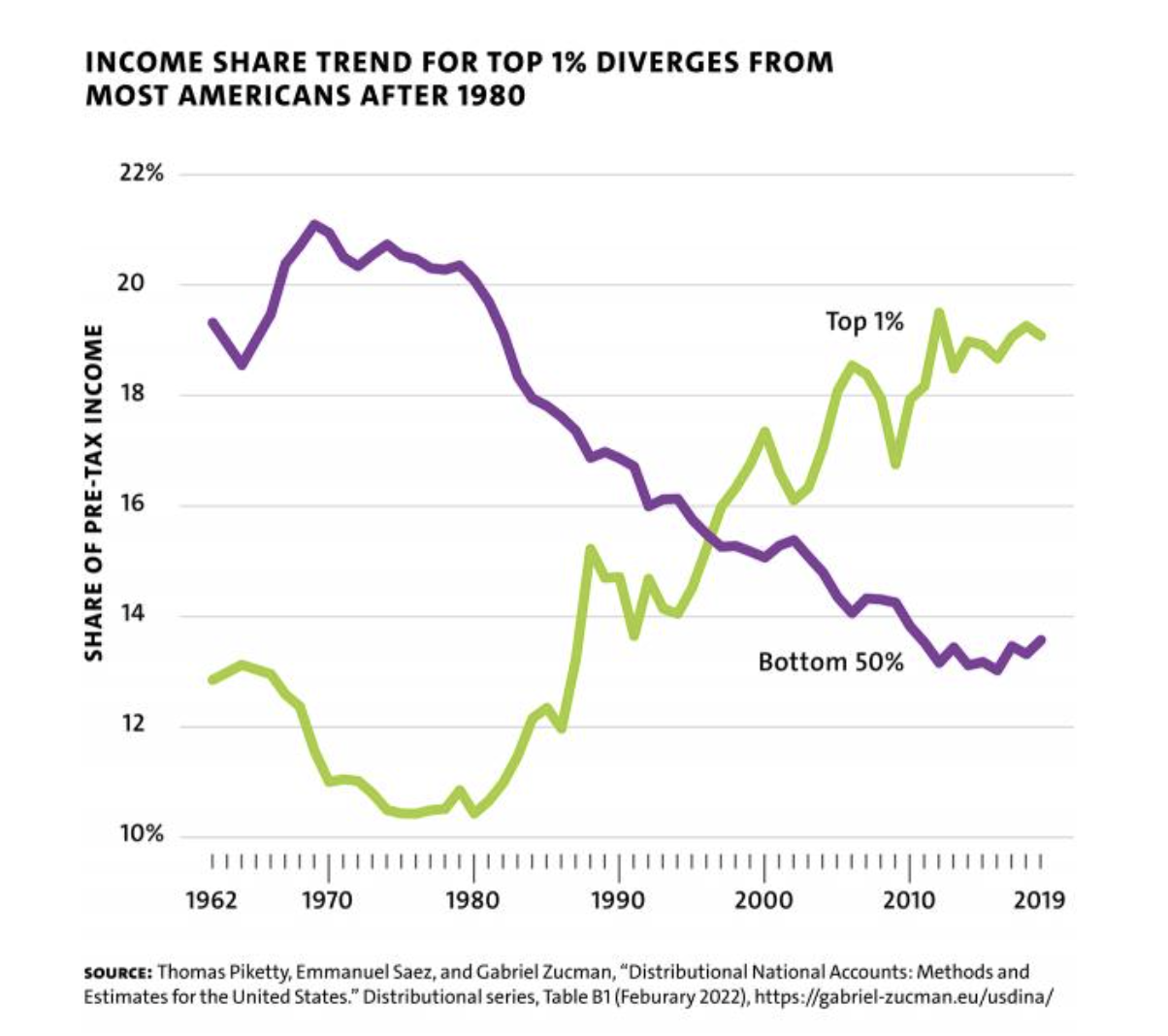
We enjoyed this piece in The Guardian by Eduardo Porter discussing the dangers of the latest proposals from Democrats like Sen. Cory Booker and Sen. Chris Van Hollen to drastically cut taxes for low- and middle-income families and pay for them through increased taxes on the wealthy. Porter argues that “The strategy endangers the prospect that the United States might ever build a social contract based on a promise of shared prosperity.”
Perhaps this “slopulist” trend will finally subside now that Jeff Bezos is getting in the game. On that front, we also liked a couple of articles on the subject over at The Atlantic, which are unfortunately paywalled. Rep. Feist recommended the aptly named “So nobody is going to pay taxes now?” by Annie Lowrey and we also appreciated this piece by moderate budget analyst Ben Ritz. Perhaps the silver lining behind these bad ideas is that they can solidify a more constructive consensus for how government can more effectively deliver.
More on that to come.
Thanks for reading and have a great long weekend!
Eric & Alec